
by Lydia Karazarifi and Laura Pipolo
Starting from his personal filmmaking journey, Mohanad Salahat brings us to Palestine, shedding light on settler-colonialism through a decolonial lens. He reflects on how water apartheid is intentionally produced and reproduced, and what water means for a decolonial future; freedom.
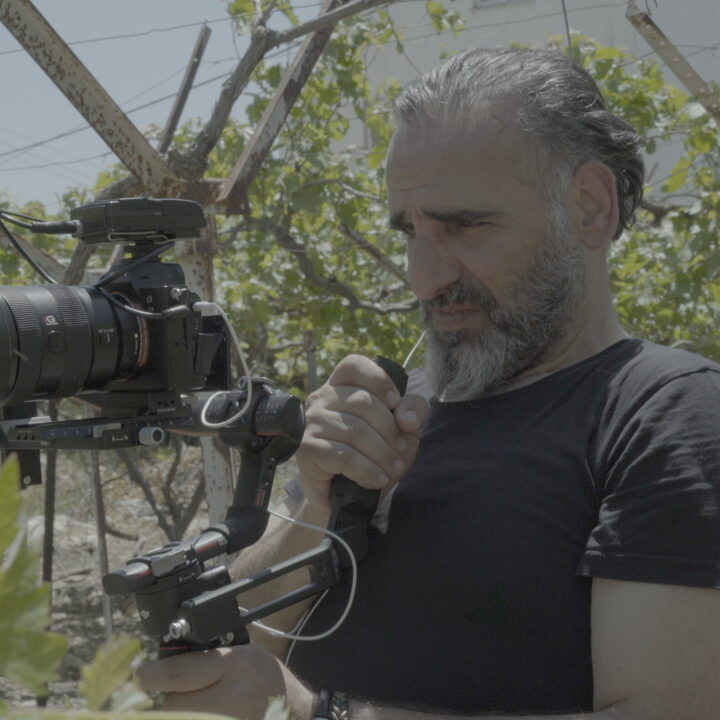
I am a Palestinian-Swedish filmmaker, writer, journalist, and researcher, originally from the village of Talluza near Nablus in the occupied West Bank. But before all of that, I usually say I am a farmer’s son. I think that matters more than any professional title.
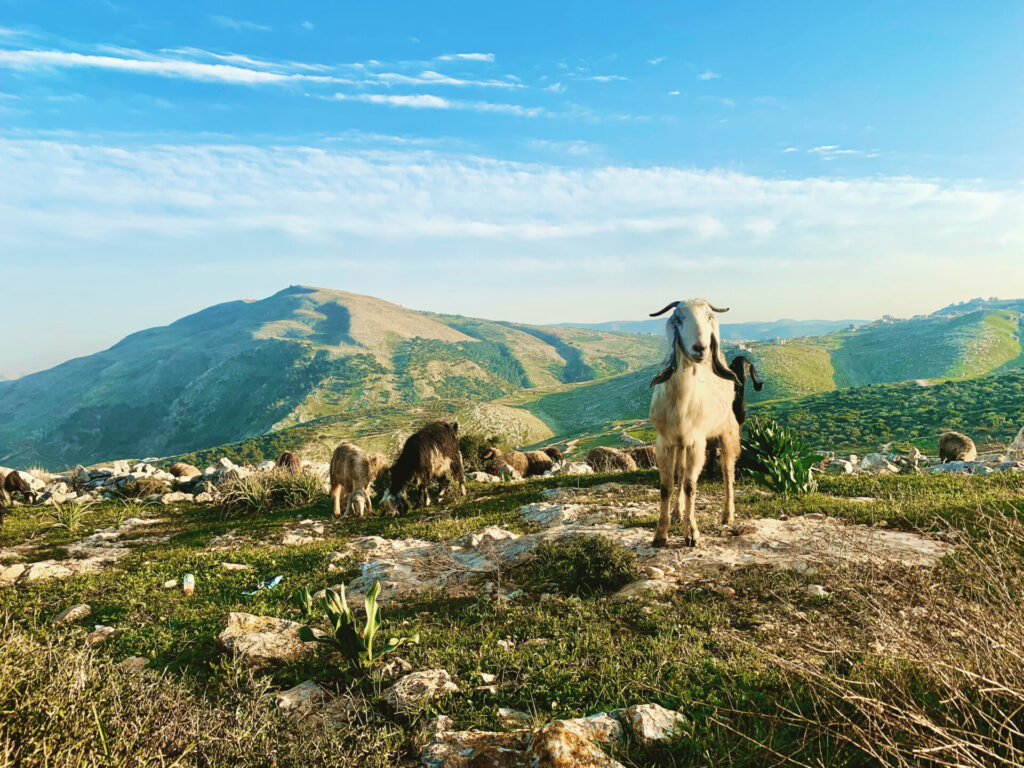
Caption: The village of Talluza ©️Mohanad Salahat.
I was born during a time when Palestine was already living inside a permanent state of suspension – military occupation, checkpoints, land confiscation, and the strange feeling that even ordinary life had become political. I later moved to Jordan where I studied law, worked in journalism, theater, and television drama, and eventually found my way into documentary filmmaking almost by accident.
Since 2005, filmmaking has become the center of my life. Over the years I worked as a journalist, producer, and director across Palestine, Jordan, Sweden, Turkey, Lebanon, Greece, and other places marked in different ways by war, displacement, borders, and memory.
In 2012, I moved to Sweden, and that distance from Palestine changed my perspective profoundly. Sometimes you only fully understand the scale of oppression once you see it from outside. Living in Europe allowed me to observe not only Palestine itself, but also how Palestine is viewed, narrated, simplified, distorted, and consumed by Western political and media structures. And also from that distance I was able to see how the destruction of Palestine is connected to the indigenous history and story, all around the world.
Filmmaking as resistance against erasure: a personal trajectory.
Honestly, I don’t think I consciously chose filmmaking. It would probably be more accurate to say that cinema slowly found me while I was busy searching for myself.
What really pushed me toward filmmaking was endless curiosity. I ask too many questions and unfortunately my brain never shuts up. Studying law in Jordan intensified that contradiction inside me. I loved studying law, especially international law, because it presented this ideal image of justice and humanity. But reality outside the classroom felt completely different. Very quickly I understood that law often functions as a language of power more than a language of justice. International law itself frequently seemed incapable of protecting the people it claimed to defend.
Cinema, unlike law, allowed me to search without pretending certainty. It allowed me to move between investigation, emotion, memory, politics, and human contradiction all at once.
I still remember one of my first jobs in documentary production in Jordan. A friend asked if I would like to help on a documentary project connected to Al Jazeera. I worked almost twenty days for something like one hundred dollars. Terrible payment honestly. But I was happier than I would ever be in a legal office. I realized very quickly that this was what I wanted to do with my life.
I moved gradually from written journalism into documentary filmmaking, first as a researcher, then field producer, then director. Most of the early projects revolved around Palestine because Palestine was not simply a topic for me — it was the condition through which I understood the world.
When you grow up Palestinian, you realize very early that even reality needs evidence. You learn that your existence itself is constantly questioned, archived, denied, rewritten, ignored or explained to you by people who have never seen your village, your checkpoints, your dead, or your memories. Under these conditions storytelling stops being only art. It becomes survival.
The camera becomes a form of resistance against erasure. And maybe that is why filmmaking, for me, was never only about aesthetics. It was about representation and visibility. About reclaiming narrative. About speaking loudly enough in a world structurally inclined to hear the colonizer before the colonized.
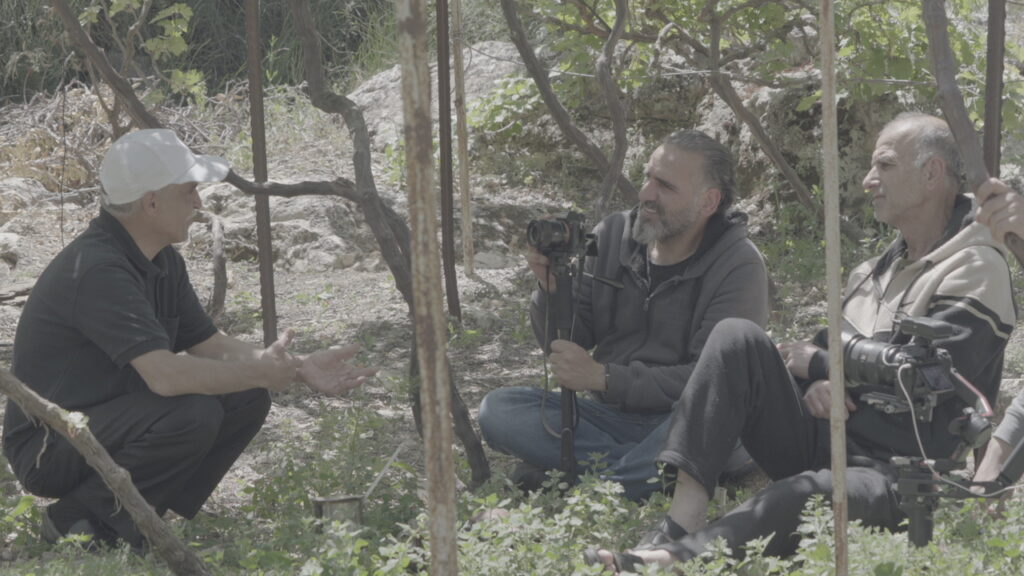
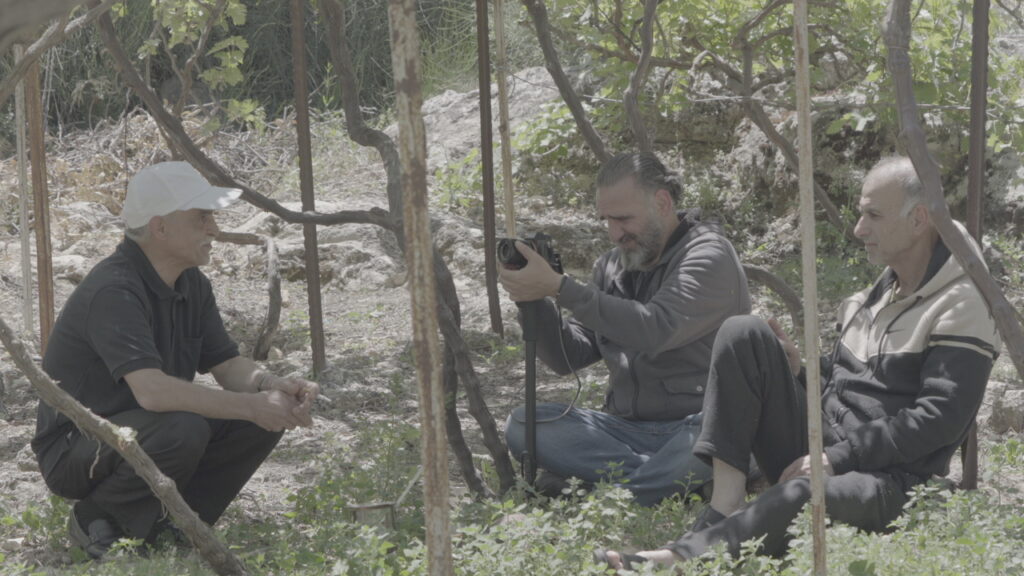
Caption: Mohanad Salahat filming with his family in his village, Talluza. ©️Mohanad Salahat.
Decolonizing the cinematic lens.
Colonialism does not only control land. It also controls the narrative and visibility itself: who gets seen, who gets believed, who gets mourned, and who gets reduced to statistics.
One of the strangest things about growing up under oppression is that you often do not fully understand your own trauma while living inside it. Oppression becomes ordinary. Surveillance becomes routine. Humiliation becomes an administrative procedure. It is only after leaving Palestine, even temporarily, that I started realizing how abnormal many aspects of our daily lives actually were and the continuity of the process from occupation to apartheid.
Living in Europe allowed me to observe Palestine through the eyes of others – through Western media, political discourse, humanitarian language, and sometimes through complete ignorance. That experience changed my cinematic language. I became more conscious of the need to speak to all people everywhere, regardless of their political or cultural background.
For me, decolonizing the cinematic lens means restoring context, the narrative and the history. It means returning Palestinians to their full human condition outside the narrow frameworks imposed by colonial narratives – not only as victims or as villains of their own story the same way the native Americans were pictured in Hollywood, but as people with humor, contradictions, desires, relationships, fears, and ordinary lives.
It also means reconnecting people to land, water, agriculture, memory, and place in opposition to a colonial system that constantly tries to fragment these relationships. Because the occupation does not only confiscate territory. It attempts to reorganize reality itself.
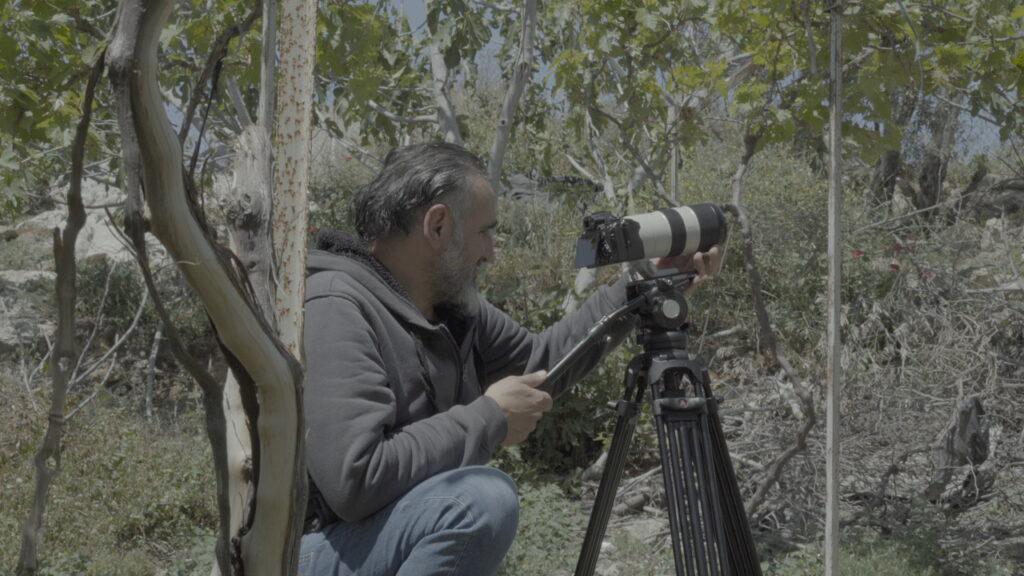
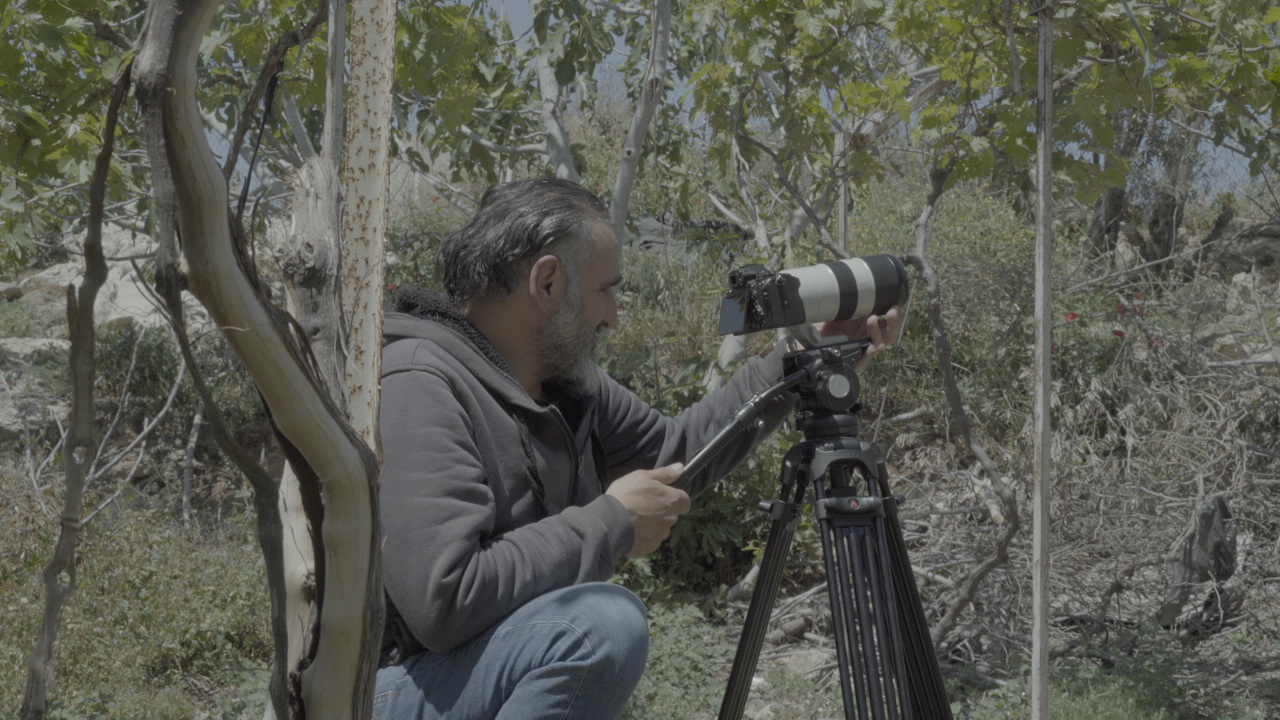
Caption: Mohanad Salahat filming in his village, Talluza. ©️Mohanad Salahat.
Tracing water under occupation.
When I moved to Sweden in 2012, I spent years working on films across different parts of the world, Syria, Lebanon, Ethiopia, Philippines… migration routes across Europe, arms trade investigations worldwide, identity, exile. I was trying, in some way, to understand how global systems of violence function. But during those years, I avoided Palestine emotionally more than geographically.
After being arrested three times in 2010 by the Palestinian Intelligence police because of my journalism, political activity, and work with international human rights organizations, I left Palestine carrying a complicated relationship with home. During those interrogations I was also placed under travel bans and periods of house arrest. Ironically, at the time I was leaving home secretly to continue filming my first documentary about Palestinian journalism.
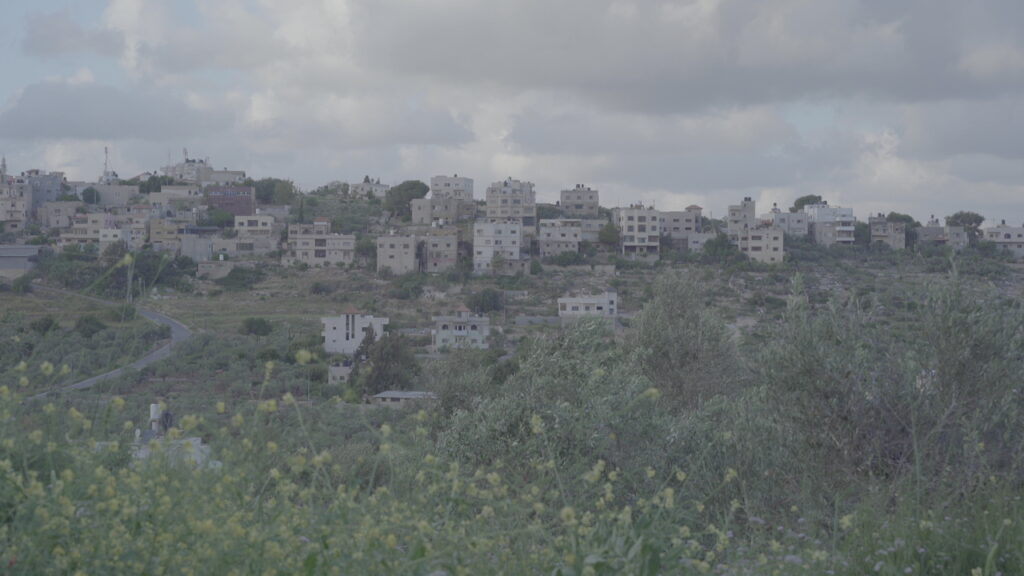
Caption: Mohanad Salahat’s village, Talluza. ©️Mohanad Salahat.
When I finally returned to Palestine in 2018 for the first time after years away, I experienced a shock. I thought I understood what had happened while I was gone. I was following events constantly from abroad. But reality felt much harsher in person. The apartheid system had become more aggressive. Palestinian institutions already seemed exhausted. Something felt structurally broken. And strangely, one of the first things that shocked me was water.
Before leaving Palestine in 2010, water reached my family’s home almost continuously. Maybe interruptions happened occasionally for maintenance, but water was still part of ordinary life. When I returned years later, water arrived only once or twice a week for a few hours.
This made absolutely no sense to me because my village, Talluza, sits beside nine natural water springs – among the most important water sources feeding the city of Nablus and surrounding villages. After the Oslo Accords, however, the village itself was fragmented geographically and politically. The residential area on the hill became Area A under limited Palestinian administration, while the valley containing all nine springs became Area C under full Israeli control. Suddenly, Palestinians were denied access to water originating literally beneath their own land. At the same time, nearby settlements had uninterrupted water supplies, industrial agriculture, green lawns, and swimming pools.
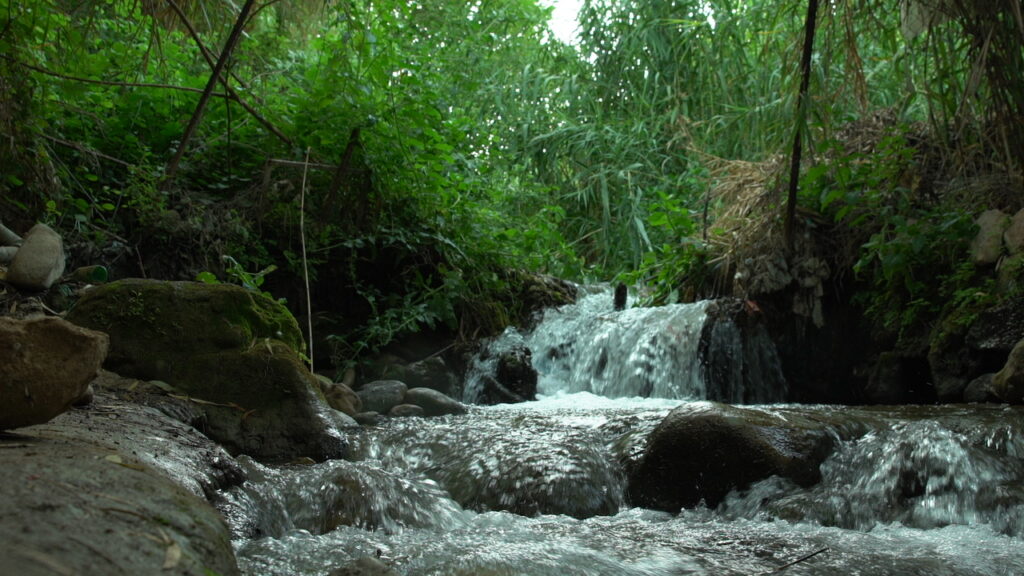
Caption: Water spring in the village Talluza. ©️Mohanad Salahat.
That contradiction stayed inside me. I began trying to understand not only water scarcity, but the entire logic of apartheid itself: how domination becomes infrastructural, bureaucratic, economic, environmental, and psychological all at once.
That journey first led me into investigative films about food apartheid and Israeli economic control over Palestinian markets. During COVID, I became trapped in Palestine for almost two years while filming, and the project evolved into a much broader investigation into how occupation penetrates every layer of Palestinian existence, land, food, agriculture, movement, labor, memory, and eventually water itself.
My first feature film as an independent director; “Rings On The Water” became more personal than anything else I had done, because for me personally, water is not just one of the main elements to survive, it is freedom. Maybe I wasn’t aware of that deep meaning of water when I started filming with my family in 2020, my film about them, and about water apartheid, but now after six years of trying to tell that story, I understand it is too difficult to find an end to that film.
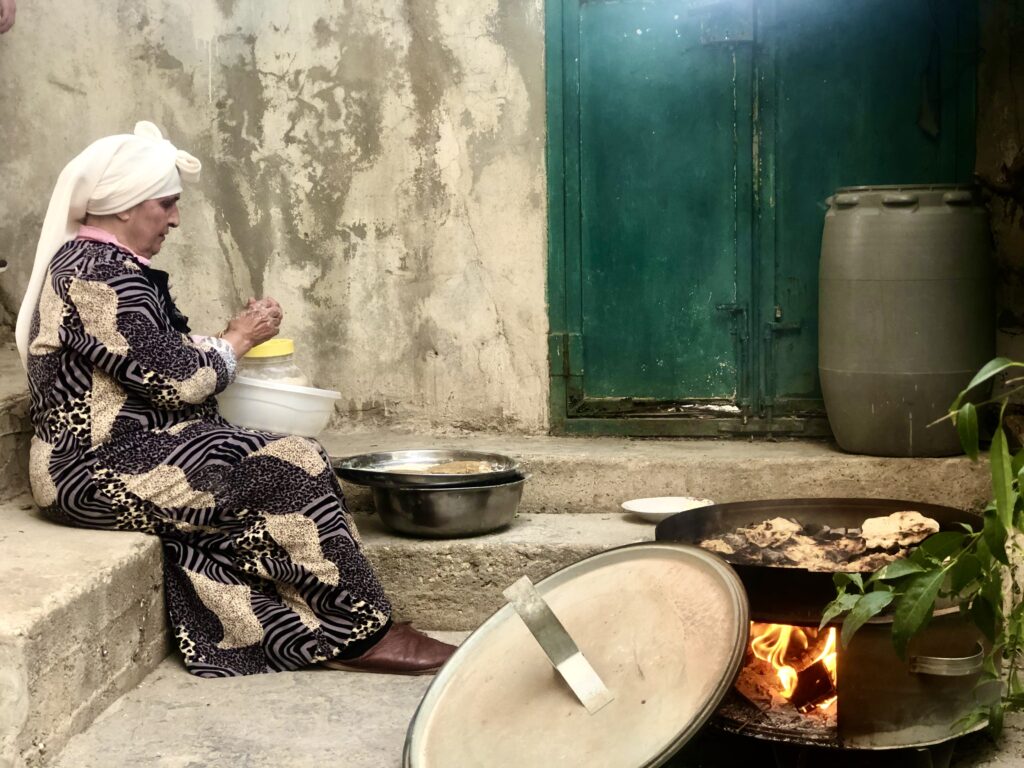
Caption: Mohanad Salahat’s mother, Amal, the main character in his film Rings On The Water. ©️Mohanad Salahat.
Because in the background of the film is not only Palestine. It is my mother. My father, my family. My village. My own childhood memories of springs, farms, drought, fear, and disappearance.
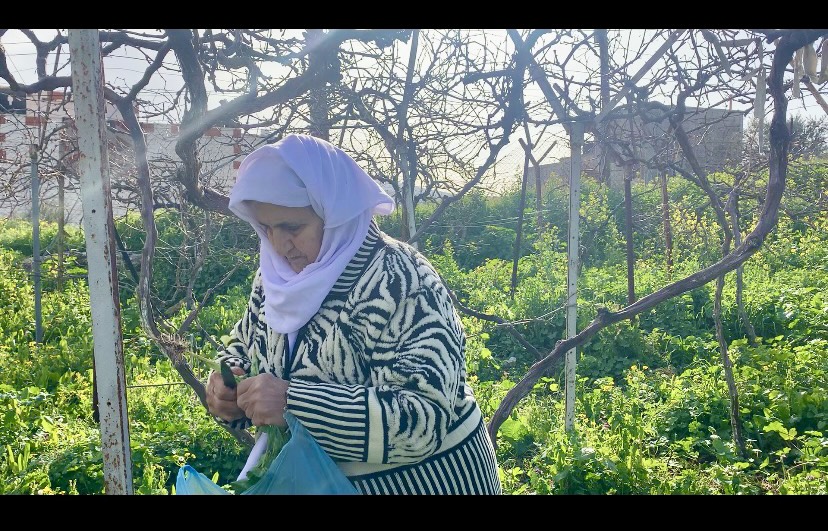
Caption: Mohanad Salahat’s mother, Amal, the main character in his film Rings On The Water. ©️Mohanad Salahat.
Water Apartheid as an institutionalised colonial condition.
When activists and academics in the West talk about “resource scarcity” or “climate vulnerability” in the Middle East, I am often overcome by a wave of dark, cynical exhaustion. They treat the lack of water as an unfortunate accident of geography or an inevitable outcome of global warming only. But through the cinematic lens, Water Apartheid is not an unequal distribution of resources; it is a structural component of settler-colonial erasure.
Colonialism does not just occupy territory; it restructures the entire ecology to make indigenous life impossible while cultivating a paradise for the settler. Today, Israel directly exploits and controls over 85% of the shared groundwater sources. The legal and economic architecture established after the Oslo Accords and the Paris Protocol did not create peace; it institutionalized dependency. The Paris Protocol stripped the Palestinian Authority of any capacity for economic or food sovereignty. We were banned from importing independent fertilizers, heavily restricted in agricultural equipment, and forced to rely almost entirely on the Israeli market. We became consumers of our own stolen geography, forced to buy back our own water from Israeli state companies like Mekorot.
Water apartheid is not a separate phenomenon or an exception within the Palestinian reality; rather, it is part of an integrated system that regulates access to land, water, movement, and housing through a hierarchical structure that grants privileges to one group while depriving another of its most fundamental rights.
But before discussing water apartheid itself, it is necessary to unpack the political and economic structures that make such control over water possible.
The colonial system that sustains Water Apartheid.
Water here is not merely a natural resource; it is one of the instruments through which a broader system of settler-colonial domination is reproduced and sustained.
The Israeli project emerged as a political response to what European history called the “Jewish question”. Yet the burden of resolving a distinctly European crisis was ultimately shifted onto the Palestinian people, who were compelled to surrender much of their homeland as compensation for centuries of persecution endured by European Jews, culminating in the Holocaust. In this sense, the indigenous population of Palestine was made to bear the costs of crimes committed elsewhere, by other societies, and against other people.
The state that was once presented as a solution to Europe’s Jewish question gradually evolved into a sophisticated regime of segregation and unequal citizenship. It is sustained by military, diplomatic, and financial backing, and later reinforced through massive investments in arms industries, high-technology sectors, and infrastructure projects. Its continued expansion relies not only on coercive power, but also on attracting settlers from around the world (European, Russian and American etc.) and integrating them into a system of material privileges – access to land, free tax, housing, resources, water and infrastructure, virtually free of charges in exchange for inhabiting these colonies for several years. These privileges are largely unavailable elsewhere and often inseparable from the dispossession of Palestinians. There is an obvious connection between apartheid – including water apartheid – and the material benefits many Israeli “citizen-settlers” receive from the system itself. That means that such a colonial system is not maintained only by military power, but also by ordinary Israelis materially benefiting from the occupation.
In order to normalize living in homes whose displaced Palestinian owners still live nearby, often in impoverished and fragmented communities, this colonial-settler context must cultivate a form of systematic demonisation of the neighbors. In fact, to live and thrive on stolen land, Israelis must participate in painting Palestinian people as the villains, the threat not only to them, but to everyone far beyond the borders of Israel. Making it seem as if the land, the history, and the future are instead rescued from the Palestinians.
Over time, this normalization produces a total dehumanization for anyone who was forced to leave in 1948 and anyone born today in what is left of Palestine. Palestinians gradually become perceived not as indigenous communities with historical and human rights, but as disposable obstacles to the colonial project. This process has been expressed explicitly within Israeli political discourse itself, including statements made by senior Israeli officials who have publicly described Palestinians as “human animals.”
European powers and the United States did not merely support the establishment of a Jewish state on a land whose native society had been fractured through displacement and mass expulsion; they also helped entrench this dehumanizing narrative that rendered Palestinians politically invisible. For decades, dominant Western media largely adopted the perspective of the colonizer, while Palestinians – despite their deep historical rootedness in the land – were increasingly represented as a people without a place, without a history, and, at times, without a legitimate claim to existence itself.
Water as a weapon of settler-colonialism.
How Water Apartheid is produced.
The weaponisation of water institutionalises racial separation and supremacy, which equals apartheid. The control of water in Palestine cannot be understood merely as discrimination or unequal resource management. Rather, it is part of a broader settler-colonial project aimed at restructuring geography, demography, agriculture, movement, and everyday life through the monopolization of land and water resources.
The violence surrounding water and its use as a weapon did not begin recently but has accompanied the colonial project since its earliest phases.
The division of the West Bank into Areas A, B, and C – through the Oslo Agreement and the Paris Protocol – was not only administrative, but also designed in a way that left almost all fertile agricultural lands and major water resources under full Israeli control. The Jordan Valley and most water-rich areas remained under the occupier’s domination while Palestinians became increasingly dependent on Israeli authorities to sustain their need for water.
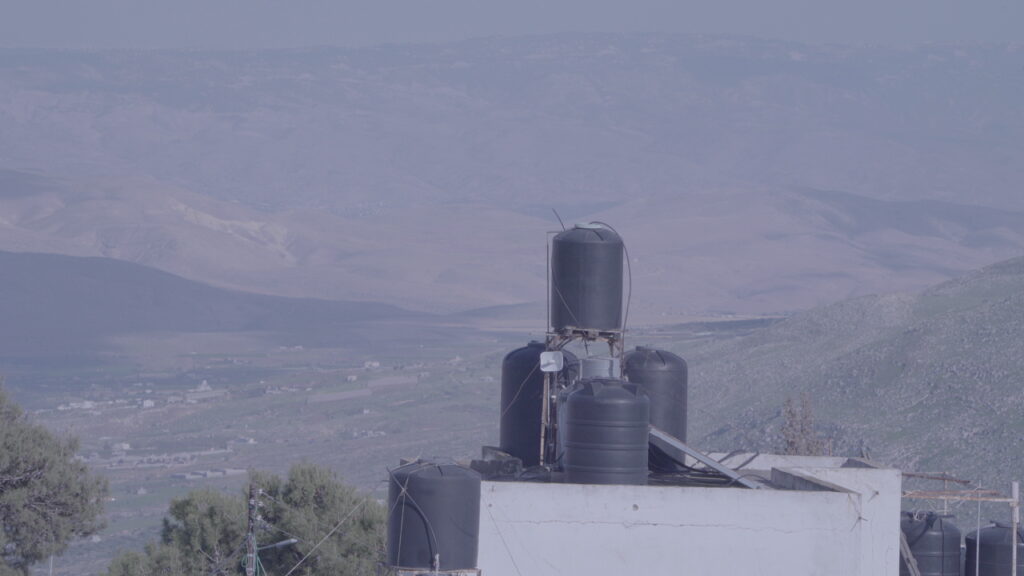
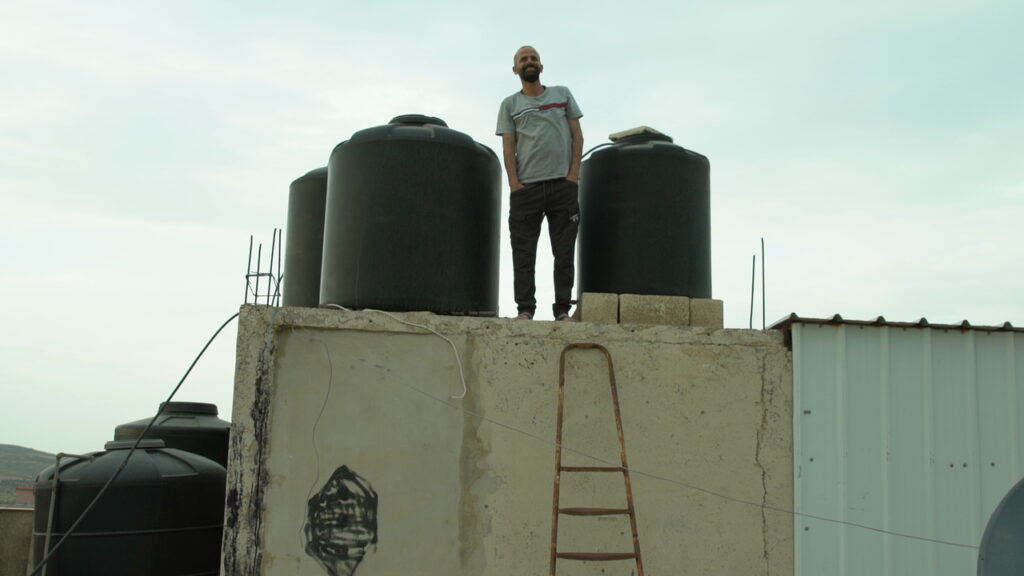
Caption: Mohanad Salahat’s village Talluza, and his brother-in-law Ammar Sholi, a main character in Salahat’s film Rings On The Water. ©️Mohanad Salahat.
There are documented historical accounts from the Nakba period – including references found within Israeli archives and media investigations – regarding the poisoning of Palestinian wells and springs – such as Lihi and the Haganah – by Zionist militias and later more systematic policies targeting agriculture, water access, and food sovereignty.
Following the establishment of the Israeli state, these practices evolved into more institutionalized forms of environmental and agricultural warfare, which continue to this day. Israeli authorities contaminate and poison Palestinian agricultural lands using aircraft to spray toxic chemicals and deliberately salinate the soil in order to damage crops and pressure rural communities into displacement. In blatant attacks on food sovereignty, settlers and soldiers often cut and destroy centuries-old olive trees, fundamental to Palestinian livelihoods. Moreover, the occupying power controls natural resources in Palestine, puts restrictions on irrigation systems, destroys water and other infrastructure basic for life.
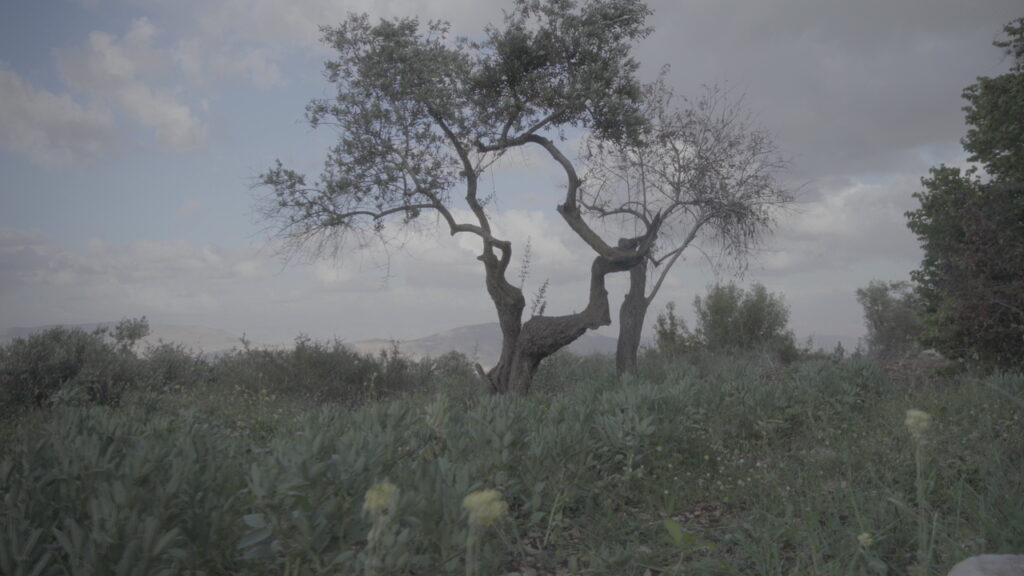
Caption: An olive tree in the farm of Mohanad Salahat’s mother. ©️Mohanad Salahat
More recently, attention has again been drawn to such practices in southern Lebanon, where accusations emerged regarding the poisoning of water sources and the spraying of toxic materials near agricultural lands as part of broader displacement strategies.
How Water Apartheid is reproduced.
Israeli settlers in the West Bank often receive between five and ten times more the amount of water than the Palestinians living in the same territory, something that shows the increasing dispossession of water. I cited an example of this before. In my village, Talluza, in the northern West Bank, before 2010, water reached my family’s home almost continuously. When I returned years later, water arrived only once or twice a week for a few hours.
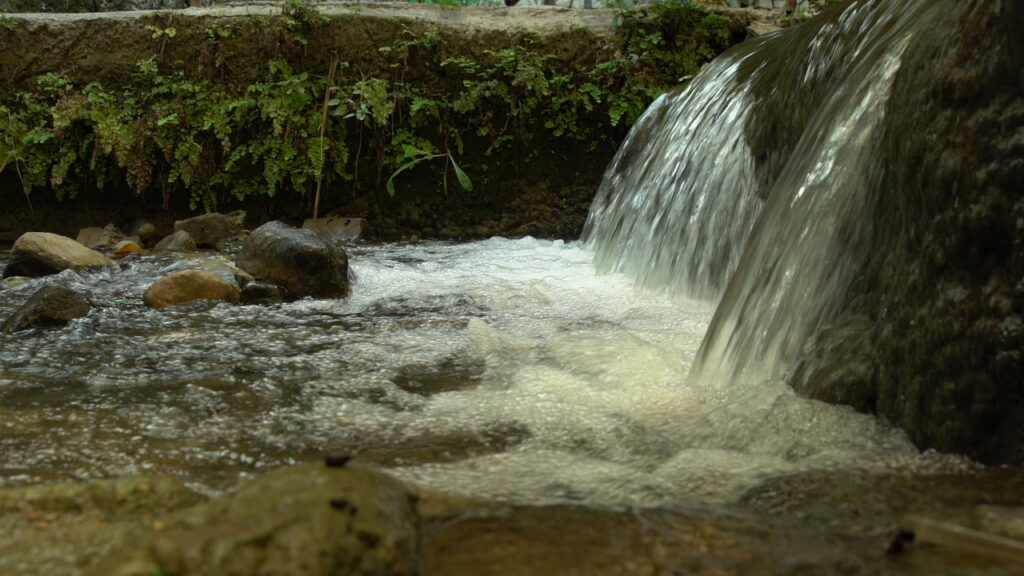
Caption: Water spring in the village of Talluza. ©️Mohanad Salahat.
After the Oslo Accords, the village residential area was classified as Area A under Palestinian administration, while most agricultural lands and all of its nine water springs were designated as Area C under full Israeli control. As a result, Israel gradually gained control over the ability of local Palestinians to access water originating from their own lands. Today, Palestinians in my village receive running water for only a few hours once per week, while much of the surrounding water is redirected toward Israeli settlements in the Jordan Valley, where it is used for intensive agriculture, modern infrastructure, and even swimming pools for settlers.
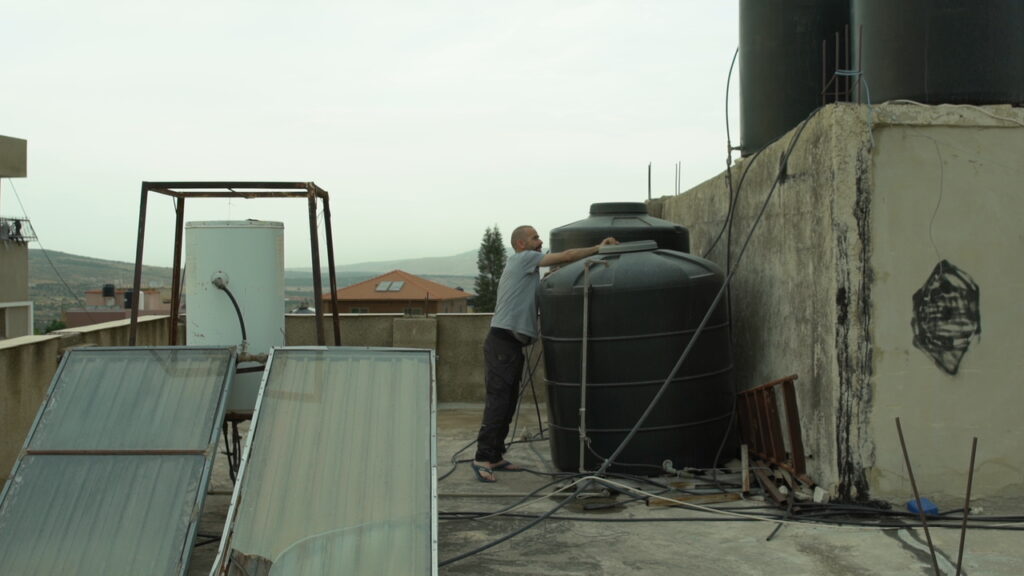
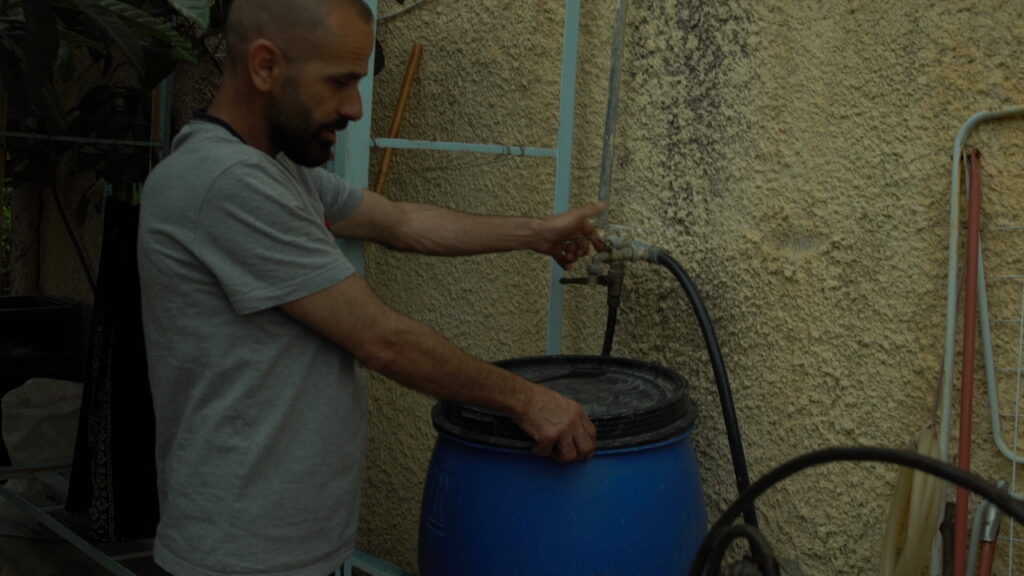
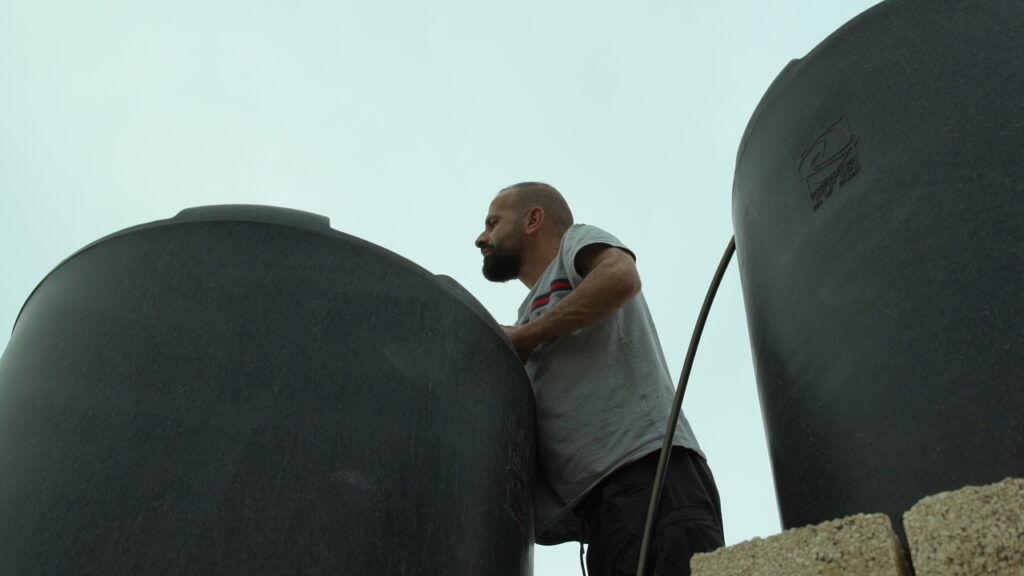
Caption: Mohanad Salahat’s village Talluza, and his brother-in-law Ammar Sholi, a main character in Salahat’s film Rings On The Water. ©️Mohanad Salahat.
From what I remember, around 2020, there were approximately 300,000 Palestinians still living in Area C, alongside roughly 170,000 Israeli settlers, many of them recent immigrants from Europe and the United States. Today, however, the number of settlers across the West Bank exceeds 700,000, while the Palestinian presence in many rural regions continues to shrink under conditions of displacement, land confiscation, and economic suffocation.
Another important dimension of the reproduction of water apartheid, reflecting the deeply racialized and colonial nature of Israeli water policies, is the restriction imposed on Palestinians regarding the collection of rainwater itself. Numerous human rights organizations, including Amnesty International, the UN, and B’Tselem, have documented how Israeli military regulations prohibit Palestinians from constructing or rehabilitating rainwater harvesting systems without military permits that are almost impossible to obtain.
Human rights reports further document repeated cases in which the Israeli army destroyed Palestinian rainwater cisterns, water reservoirs, and traditional collection wells, including projects funded by international organizations. In several documented incidents, wells and water collection systems were reportedly filled with concrete or demolished to prevent Palestinian communities from storing rainwater for agricultural or domestic use.
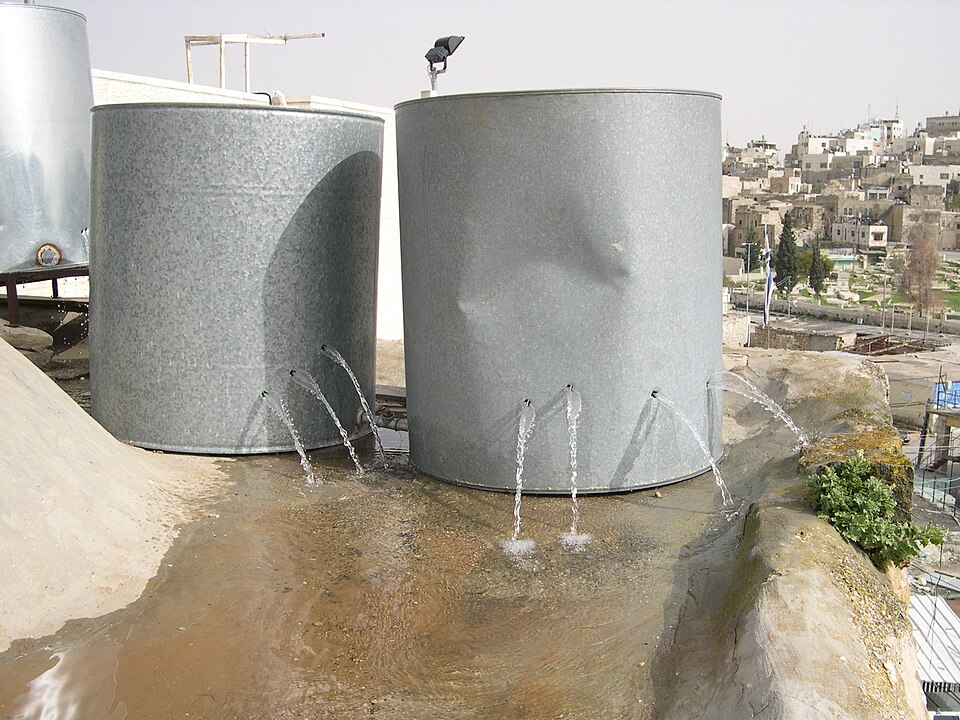
Caption: Palestinian water tanks destroyed by settlers in Hebron/Photo by ISM Palestine (2009)
These practices reveal that the issue is not merely one of resource management, but part of a broader system of domination aimed at controlling every aspect of Palestinian survival. Preventing indigenous communities from even collecting rainwater – a basic natural resource falling on their own land – reflects an extreme form of colonial control and environmental violence. At the same time, nearby Israeli settlements continue to enjoy unrestricted water access.
From the river to the sea.
An apartheid system persists not only because people obey authority, but also because many individuals derive direct economic and social benefits from that obedience. The Israeli apartheid system, including water apartheid, is not maintained solely through military violence. It also depends on the creation of a system of privileges that transforms settlers into material beneficiaries of the colonial structure itself. In this sense, water apartheid becomes a symbolic expression of racial hierarchy and colonial sovereignty over life.
The weaponisation of water sustains the colonial condition, and it is reproduced intentionally and constantly in people’s everyday lives.
At the same time, water is not just one of the main elements of survival; for many, it represents freedom, and could help us understand, imagine, prefigure and build a decolonial future.
From the river to the sea, Palestine will be free.
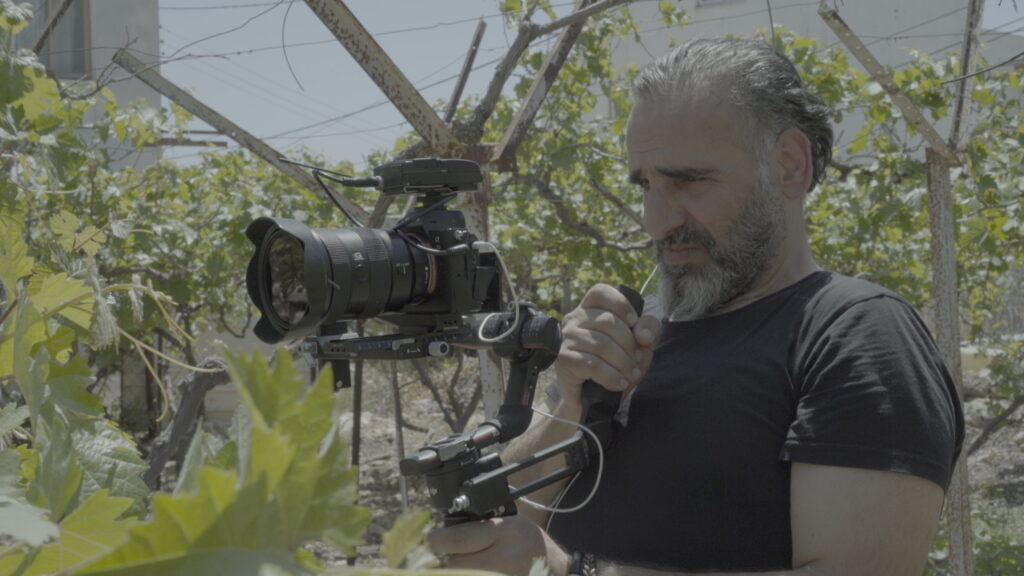
Caption: Mohanad Salahat filming in his village, Talluza. ©️Mohanad Salahat