
by Alice Dal Gobbo
This essay introduces the series “Climate democracy when democracy fails. The affective politics of climate justice movements in Europe”: a research journey in the democratic and emotional practices of climate justice movements across Europe.
In Europe, climate, democracy, and justice are backsliding in the face of geopolitics, the logic of war, militarisation, and economic growth. On top of this, activism for climate justice is increasingly repressed and criminalized.
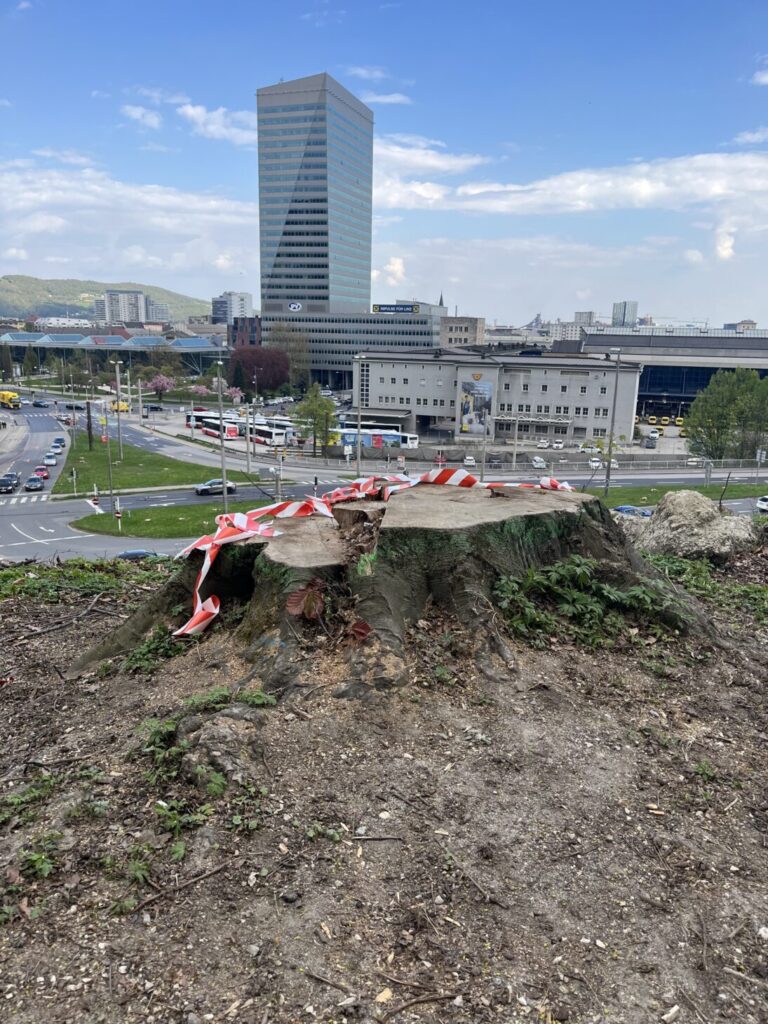
What remains of an ancient tree in Linz’s Ziegelei Park. Credits: Alice Dal Gobbo
One would expect the movement to be in decline. Yet, climate justice activism has shown a great capacity to reinvent and reorganise. The “crisis” appears indeed more like a window to question old forms of organisation and build new ones.
This series is about the complex constellation of climate, democracy, and emotions in climate justice activism in Europe, drawing on my research in the RETOOL project. We will share narratives of different encounters with highly diverse climate justice movements across Italy, UK, Austria, and Ireland.
What will emerge is a partial and fragmented picture, though characterised by reflexivity, analysis, and common threads. It will not be a comprehensive understanding of the climate justice movement, but a series of stories of and by the groups involved, reports on their perception of the polycrisis, to find resonances and dissonances. In this moment of fatigue for many activists, researchers can be an echo for their experiences and struggles.
There is also a more personal story here: that of precarious academic labour. I am carrying out this research with seven years of precarious contracts on my shoulders, of which this is the latest – and without a better fate in view. Having little control on the overall flow of the project, I had to do complex arrangements with my newborn child – and the older too. Hence these contributions will also be about what research one can, and cannot, do within the constraints of an increasingly harsh academic environment.
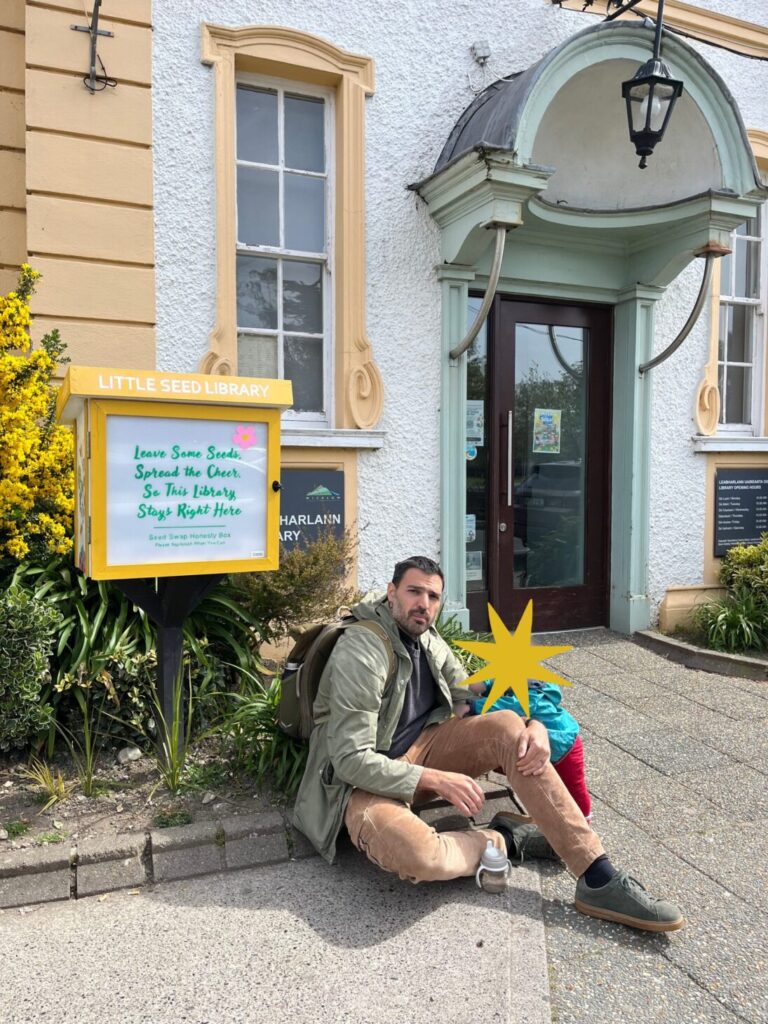
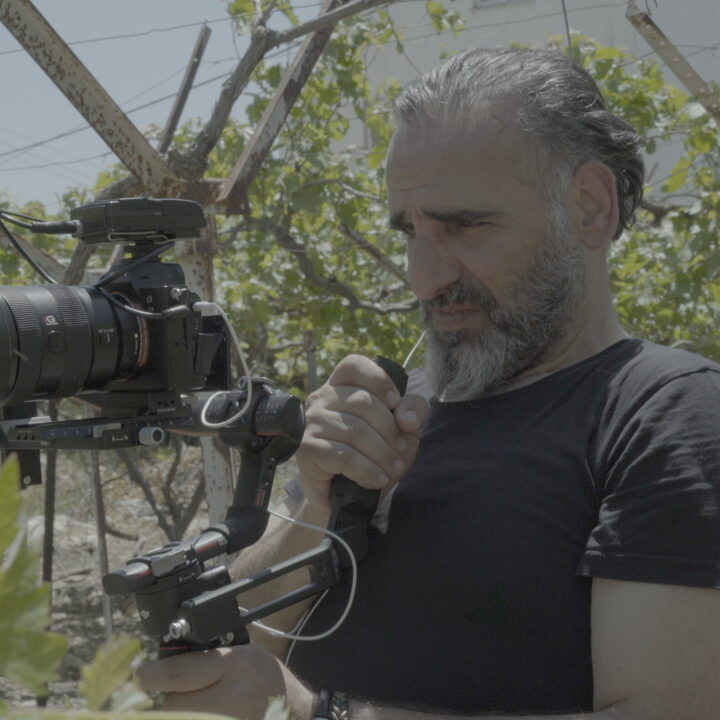
Doing fieldwork with family. Credits: Alice Dal Gobbo
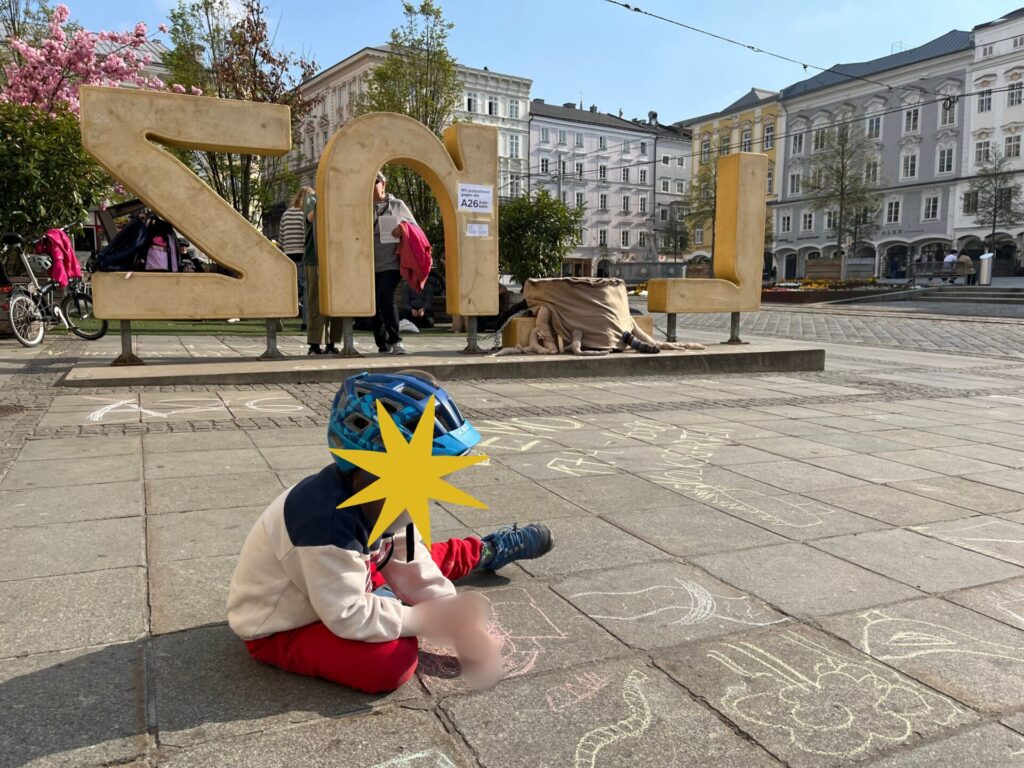
Doing fieldwork with family. Credits: Alice Dal Gobbo
This series does not feature among my duties and won’t bring much academic prestige – though it might be “valorised” in the project’s dissemination. Then why even bother? I owe it to the people who offered me their time, energy, hospitality, emotions, and meanings. I could not just close their experiences down in expensive academic articles or policy briefs with restricted audiences.
Irrespective of the closeness of the activists to my political and strategic ideals, I felt they were doing something far more important than me: going “out there” and claim a better future for all. I realise academic work often does not amount to this, but I do see the world burning. This series is one, little, step to give something back, and contribute to the collective struggle for that better future. It is a way to follow up on my commitments for engaged scholarship.
The remainder of this essay sketches the conceptual background of the stories I will tell. First, I contextualise climate justice concerns in a changing world order; second, I consider the relationship between climate and democracy; then I add emotions to this picture and finally suggest how climate, emotions and democracy might be set into a (transformative) dialogue. I close with a methodological note on how the research was carried out.
The climate crisis in the geopolitical order
While the climate crisis will not fade into the background of everyday life and planetary history, so it seems to be doing in global politics. Surely, environmental stewardship and justice have always been dearer to social movements and civil society than to states, markets, and supra-national institutions.
Yet the advent of sustainable development and green economy discourses opened a window of interest in the EU – if anything as a means to relaunch economic growth. Here, the intense mobilisations for climate justice, peaked in 2019-2020 with Fridays for Future and Extinction Rebellion, sparked public attention on the issue.
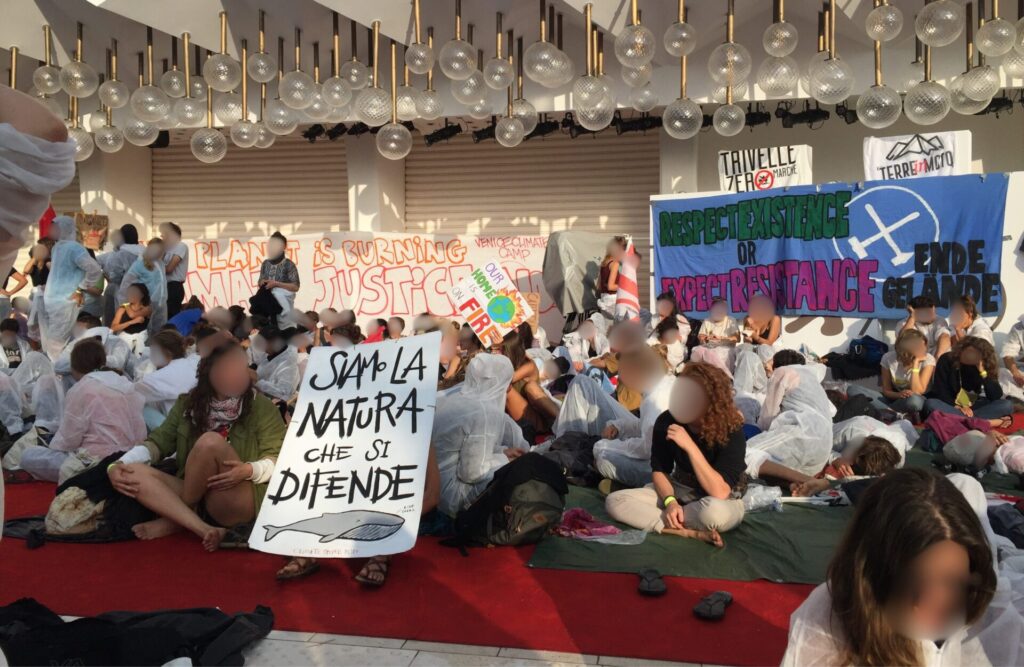
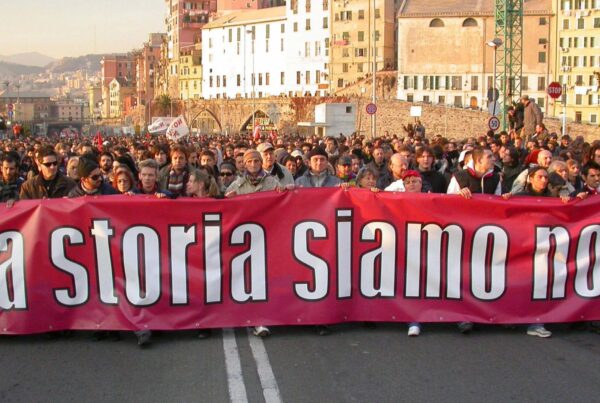
Climate movements in 2019: more-than-human solidarities and social convergence. Credits: Alice Dal Gobbo
The Covid-19 pandemic was a first challenge to “green” governance, as concerns shifted towards personal safety, social security, and economic relaunch. Shortly after, the Russian invasion of Ukraine brought issues of energy and geopolitical security centre stage. Nevertheless, responses were still framed in terms of implementing – among others – “green transitions”.
Yet, with the continuation of the Russian-Ukrainian war, the intensification of the zionist colonial entity’s genocide on Palestine and the Palestinian people, and the war of the US against Iran, the geopolitical climate has changed too.
Prioritizing aggressive national “security” via increasing militarisation has taken the place of the green economy as the pivotal theme in international relations, national politics, and economic relaunch. Both right-wing and liberal parties are systematically erasing climate concerns from political agendas, revamping an ideal of fossil-based, authoritarian, capitalism that mixes patriarchal, classist, nationalist, and racist ideals.
The decline of the climate agenda is not incidental. The recognition that the green economy was failing to save the last vestiges of a senescent capitalism called for a radical shift away from ecology and climate. This confirmed that there is a fundamental contradiction between capitalism and the reproduction of life on the planet.
It also confirmed the intimate relation between capital and war. Hence what the green politics of transitions could not achieve, the black politics of war are doing. This mad race goes both back in time, to the era of capitalist oil-based expansion, and forward in the future, towards a new world order.
It is the one last throw of the dice of a collapsing system, and of its dominant subjectivity: the white heterosexual man whose ultimate mission is appropriating, oppressing, raising above the others, and commanding.
Climate justice and democracy: what’s on the menu?
Democratic and climate backsliding are happening together. This suggests that climate governance requires democracy – or rather that contemporary democracies are incapable of dealing with the climate crisis. Or maybe both. Indeed, there is a complex relation between democracy and climate change: Do we need more, or less, democracy to govern the unprecedented challenges of the so-called “Anthropocene”? What forms of decision making are fit to the task? Who (or what) are the subjects to be involved?
Several themes emerge when inquiring around liberal democracy:
- Temporal dimensions. According to some, democracy, with its need for debate, compromise and consensus could be intrinsically slow, and therefore ill-equipped to act urgently. At the same time, short electoral cycles and the myopia of politicians could make it impossible to engage with the deep time of climate change and earthly dwelling.
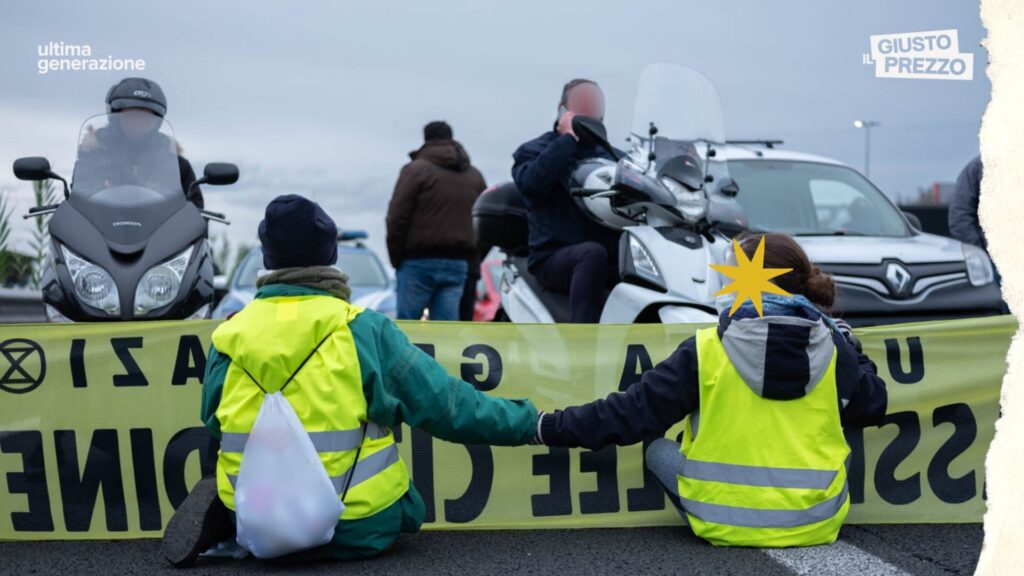
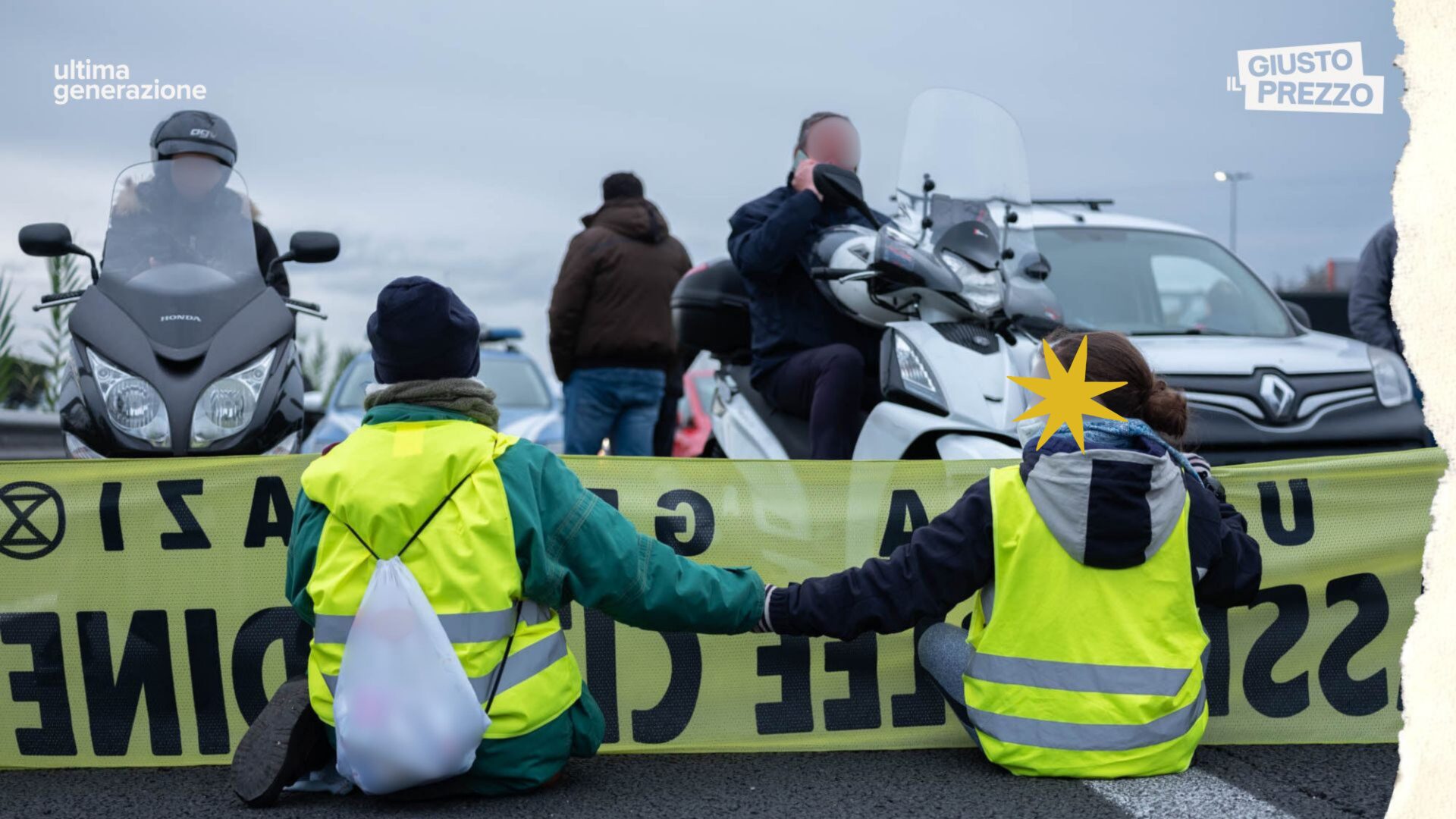
Civil disobedience, solidarity and discomfort (one of the participants’ chosen images). Credits: Ultima Generazione
- Representative democracy. Institutions of representation are increasingly distant from citizens, self-serving, and prone to the influence of powerful lobbies, failing their democratic mission. Even when green policies and investments are pushed for, they are not concerned with justice. The most concerned by ecological emergencies are the least represented in formal institutions: young, unborn, racialised and feminised people, non-humans, and natural entities.
- The state as institution. States can legislate and enact policies only within their borders – and their mission is (supposedly) to pursue the good of those who are “in”. This makes the nation-state an imperfect institution when it comes to govern global challenges that require coordination and solidarity. Furthermore, nation-states are functional to sustain capital accumulation and economic growth in all their classist, sexist, colonial, and speciests dimensions. This has become patently evident with the advent of neoliberalism and now, with the return of geopolitics, the colonial and exclusionary nature of the state is coming back into view. Concerned with maintaining the personalistic interests of (some of) its (privileged) people, the state is showing its allegiance to war rather than just transitions.
- The anthropocentric nature of liberal democracy. At the heart of liberal democracy lies a dualism between “society” and “nature”, whereby the latter has been constructed as a mere “object” to be governed and mastered by the former. With the climate crisis, “nature” comes strongly into the picture of politics with the agency of a subject, and new ways for including non-human nature within democratic practice are needed.
In sum, in times of polycrisis, the continuation of liberal democracy as we know it cannot be taken for granted. The reformist option of “environmental democracy”, based on technically adjusting the current system to meet ecological constraints, has patently failed. Hence more radical responses are needed.
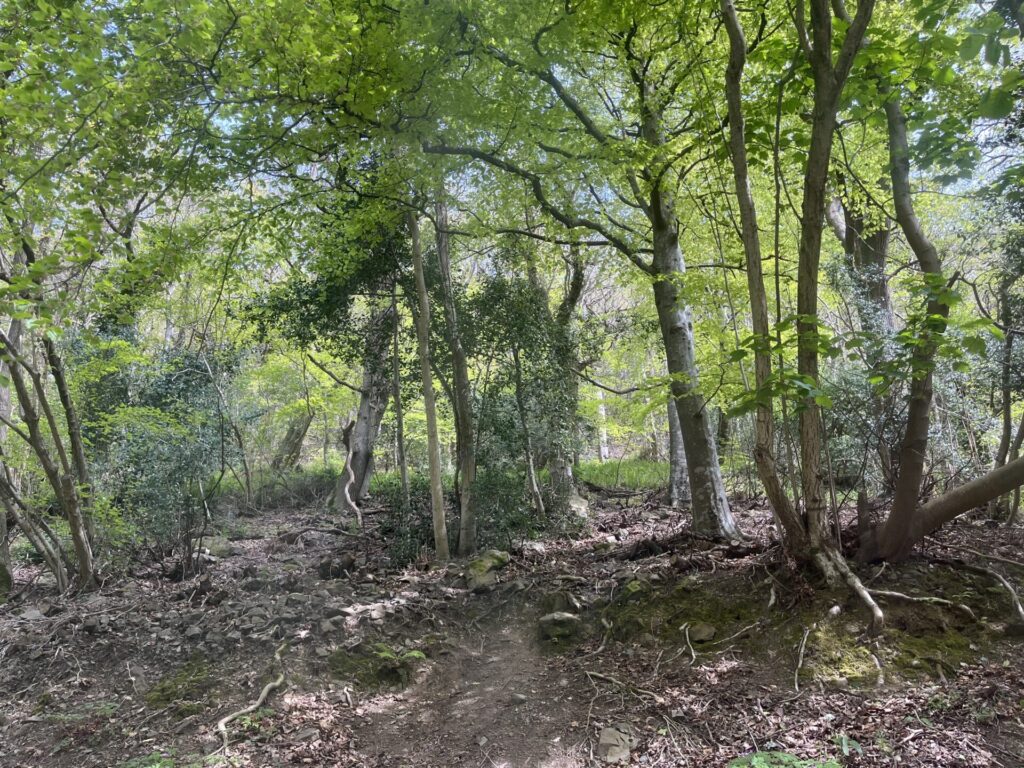
Irish countryside and the difficult labour of struggling for biodiversity. Credits: Alice Dal Gobbo
“Authoritative” forms of governance have been saluted as ways to better tackle present and future challenges: more centralised decision-making would make decisions faster and possibly more enlightened, as in the hypothesis of “Climate Leviathan”. Yet, authoritarianism has historically been in contrast with ecological stewardship and environmental justice, since it tends to reproduce the status quo and its injustices.
“Ecological democracy” has been proposed as “a major provocation to liberal democracy”: a way to initiate radical and profound change in/of existing institutions. Ecological democracy is an approach to politics in times of multiple crises. It proposes a participatory renewal of democratic institutions, including Citizens’ Assemblies, mini-publics, and other deliberative fora. It advocates for an eco-centric approach and promotes inclusion of the subjects now excluded – in practice or by law – from decision-making.
The “political emotions” of the climate crisis
Contemporary democratic institutions are based on the ideal of disembodied rationality and rational dialogue among abstract individuals. The climate crisis brings materiality centre stage of political and social life, making ecological democracy a radical challenge for present politics.
How can different forms of intelligence become part of democratic decision-making? How to imagine political participation beyond language? These questions are important for thinking about non-human inclusion in politics. But they also open the key issue of emotions as a political “language”.
The climate crisis involves a lot of emotional reactions. Unsurprisingly, the emotions accompanying the experience and awareness of the climate crisis can be defined as “negative”, like anxiety, fear, grief, despair, melancholia. These tend to make subjects feel lost and impotent facing the magnitude of the challenges. Other emotions emerge at the crossroads of the climate crisis and institutional inertia, like anger, rage, and indignation.
Carrying on in daily life despite the awareness of the crisis requires coping strategies, such as denial and cognitive splitting. Yet when these become impossible, and the subjective wound of climate apocalypse becomes unbearable, subjects are called to action. Emotions push subjects to participate in political life, becoming part of social movements or campaigns.
The deep and difficult emotions elicited by the climate breakdown have pushed climate movements to engage in practices of care and regeneration, creating emotionally nurturing spaces for developing a sense of security and self-consistency. This is a strategic and open choice. In some cases, there is recognition that human and other-than-human destinies are entangled: the fight for the ecological good is coextensive with human, subjective, wellbeing.
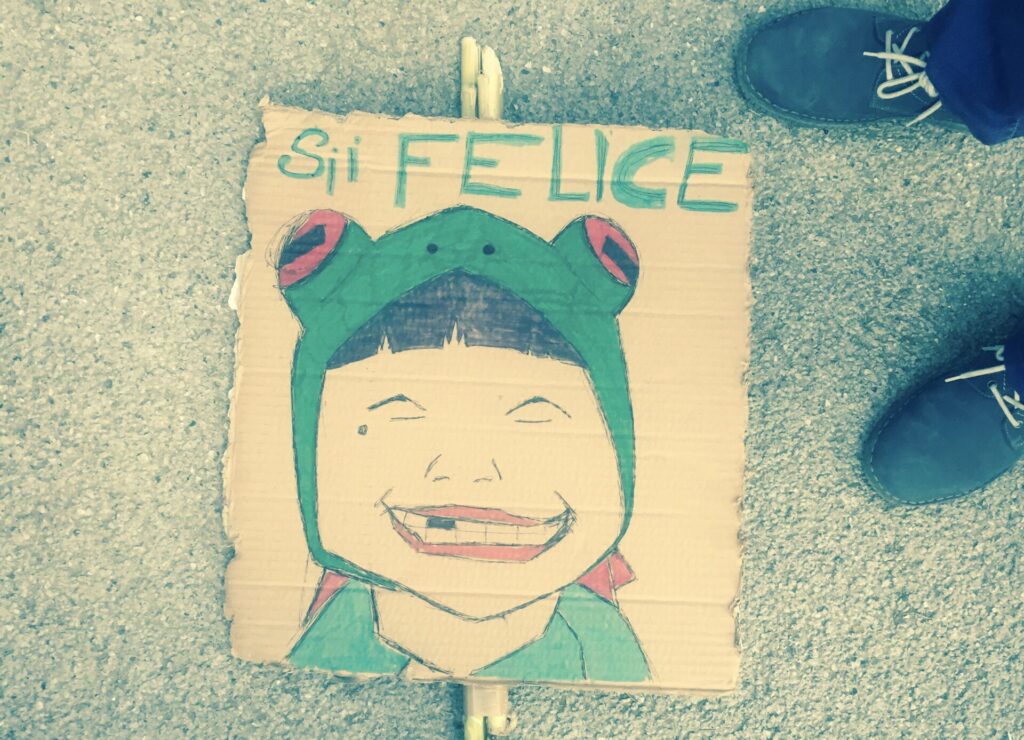
Climate justice as a struggle for happiness. Credits: Alice Dal Gobbo
The movement becomes a space for the elaboration of complex climate emotions, turning some of them into transformative energy. The collective elaboration of anxiety and loss, the opportunity to name the problem, share experiences, and clearly identify responsibilities can empower subjects to act.
Rage is turned from a generic feeling into a push to name those responsible for the climate crisis, act against systemic injustices and oppression, mobilise for the common good.
Hope arises from the collective experience of struggle: being active makes concrete the possibility that “another world is possible”. Activism is thus itself a source of “positive” emotions like joy, solidarity, and efficacy.
Affective ecological democracy: climate justice movement’s democratic innovation and the perspective of ecological feminism
In the last decades, climate justice movements have become “democratising agents”: crucial actors in rethinking ecological governance. Moved by a strong democratic imaginary, they see climate justice as dependent on strengthening and widening participation in decision-making processes.
Movements have pushed democratic innovations, for instance by demanding the establishment of deliberative democracy institutions, or the recognition of rights of nature.
Although not so straightforwardly (as we shall see) climate justice movements have also developed “prefigurative democracy”: the effort to embody in their own practices the change they would like to see in the world. They practice horizontal organisation and sociocracy to expand inclusion and representation.
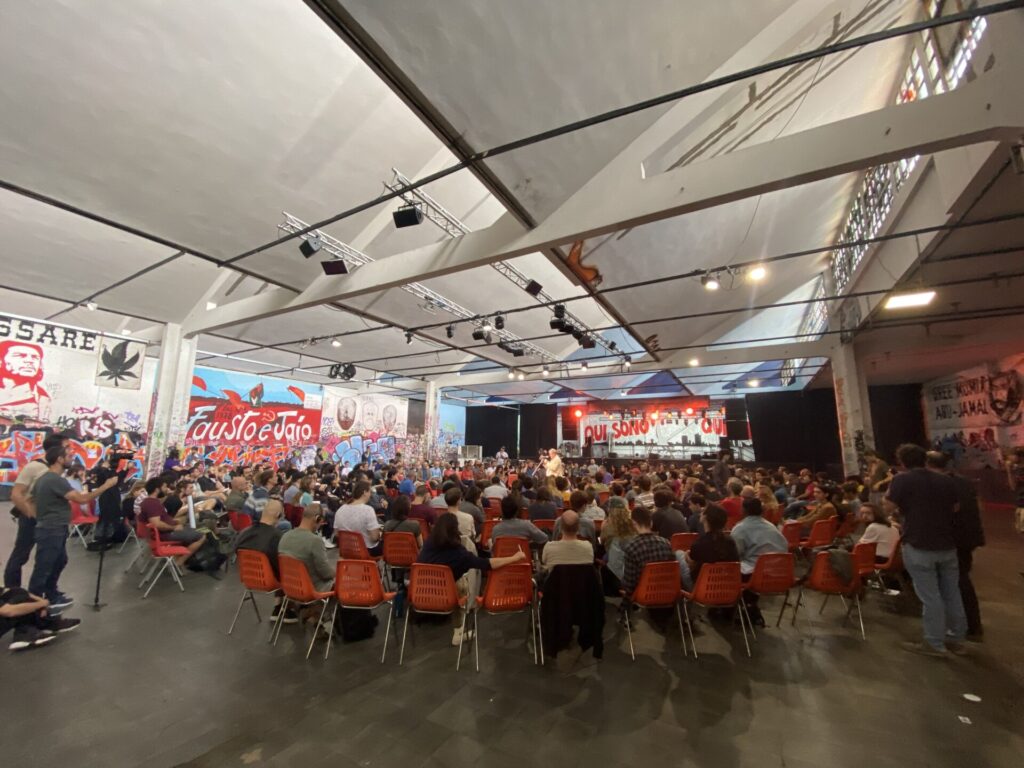
World congress for climate justice, assembly. Credits: Alice Dal Gobbo
On the emotional side, not only are emotions important “within” movements: they also feature in their communications and actions, which are often meant to elicit feelings of rage, discomfort, solidarity, grief. Emotions meet democratic innovation when climate justice movements strive to build deliberative spaces where people can express their feelings, elaborate on them, and on that basis build informed decision-making.
Differently from populist right-wing politics that exploit difficult emotions, these movements try to care for emotions themselves. By centring emotions as political, they treat materiality and bodies as a rightful part of decision-making.
Coming from the perspective of ecological feminism, these characteristics look innovative in a deep, systemic way. According to ecological feminism, patriarchy is responsible (with other forms of domination) for the present socioecological crisis.
Male domination has divided the world into discrete hierarchical spheres, which have radicalised throughout capitalist modernity: man over woman, human over animal, mind over body, rationality over emotions, culture over nature, subject over object. The nature-culture split underpins the exploitation of the earth and its treatment as an inanimate object and is interrelated to all the others.
From the perspective of ecological feminism, both the socio-economic system (capitalism) and the political system (liberal democracy) that characterise modernity depend on these splits. Hence, they will be unable to face the ecological crisis.
As Plumwood suggests
“it is not democracy that has failed ecology, but liberal democracy that has failed both democracy and ecology”.
Liberal democracy is based on the aforementioned splits. Within its horizon, “politics” is a disembodied, abstract, and rational pursuit of individual self-interests within a public sphere, completely abstracted from “nature”. Nature, in this conception, is not just the non-human, but also all those humans who do not subscribe to the ideal of the white, male, rational, able, human, citizen.
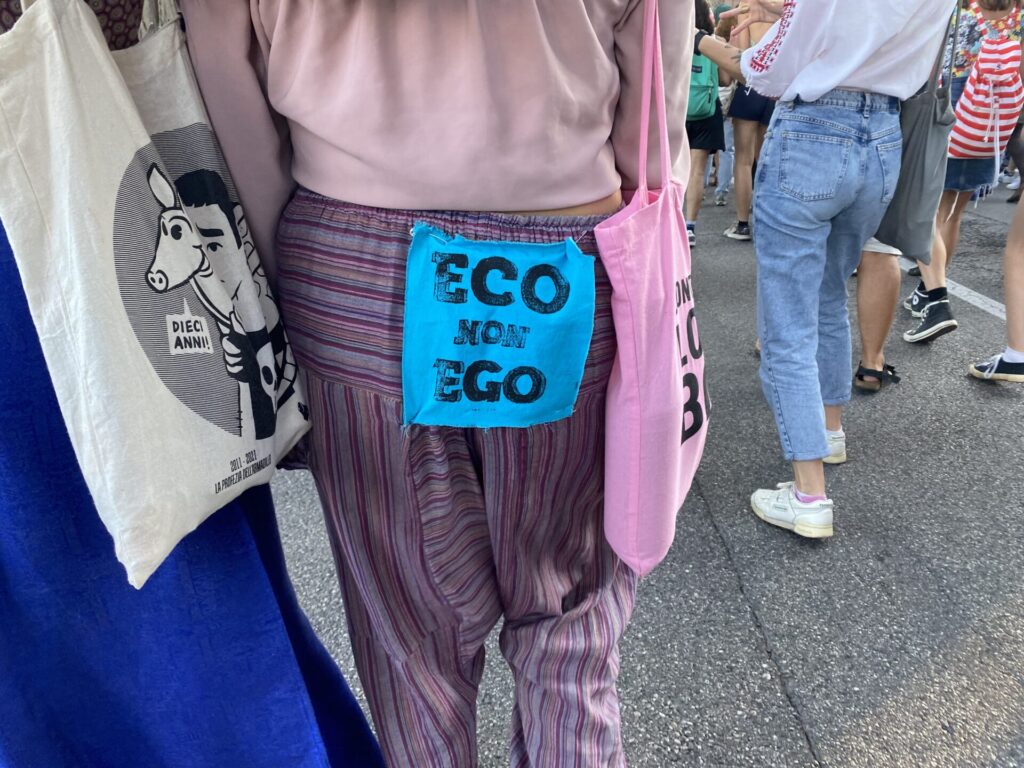
Eco not ego: changing subjectivities as part of climate justice struggles. Credits: Alice Dal Gobbo
This excludes from politics and set apart from democratic control all that is material: social reproduction and the economy. But also, and crucially, all stakeholders that do not conform to the modern-patriarchal ideal of political subject.
Bringing emotions back to politics is therefore not simply a strategic or incidental move: it brings a radical “disorder” in existing institutions. It suggests that politics should (re)internalise all those who were framed as “nature” and thereby expelled from democratic decision-making: subjects who, from their marginal place, have been practicing and imagining radical alternatives.
This opens a space for intersectional politics and struggles within the climate crisis, since women are not the only marginalised actors of modern politics: racialised, queer, non-human animals, disabled, young and unborn subjects have all been tainted by non-conformity.
From this point of view, emotions and affects are relevant to all politics, but they have a further significance for climate and ecology.
The human body and its emotions are the realisation of “embodied nature”: ecological interdependencies and entanglements. It is one way in which subjects can “resonate” with the ecologies they live in, recognise their own affective-emotional experience of crisis and regeneration as part of a wider socio-ecological reality. Changing subjectivity is one crucial step in the direction of climate justice.
As my narratives from the field will show, this conceptual architecture does not fully represent reality. While a move in this direction can be recognised, the world is always messier: it does not conform to ideas – and instead challenges them. This field diary is a way of putting to test, and contest, these ideas.
Methodological note
The stories I will tell emerge from fieldwork in the context of our RETOOL research. It involved multiple methodologies, to try and grasp climate justice movements’ strategies, orientations, ideologies, and affections. I looked at websites and social media to have a sense of movements’ self-portrayal to the outside. But the bulk of the research was concerned with first-person narratives and experiences.
Whenever possible, I went to marches and assemblies doing participant observation, yet this was somehow limited by the temporal and geographical constraints. I carried out in-depth interviews with participants. I asked them to bring along an image that represented their emotional experience of activism, to start the conversation with something concrete and visual, which could be rooted in experience, rather than in general and abstract terms.
In line with this commitment, with each group I carried out a “participatory mapping” exercise. Normally, participatory mapping involves a collective representation of a territory – e.g., a neighbourhood, a park, a town. I did something different: I asked a small group of people in each group to map their movement as if it were a territory. I wanted this exercise to be embodied and affective: the map was not drawn but “made”, with the objects we found in the various rooms we were in, and collaboratively, so it involved collective discussion and bargaining.
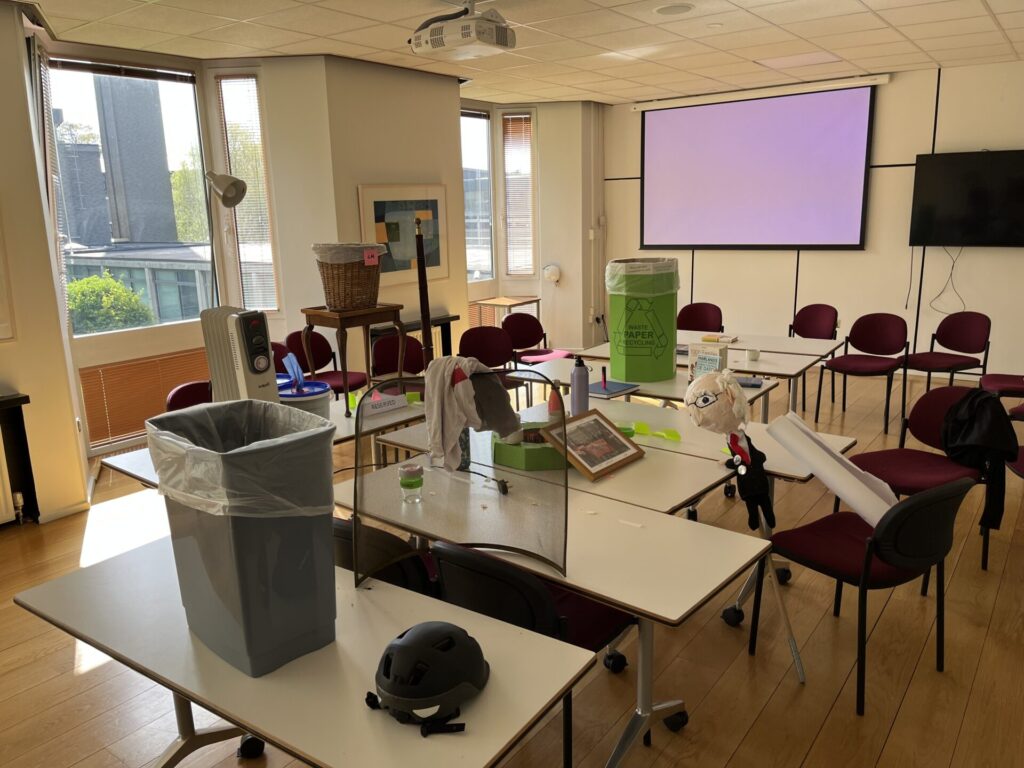
A picture from one of the participatory mapping workshops. Credits: Alice Dal Gobbo
This allowed me to inquire around the organisational aspects of the movement, its self-definition in relation to its “outside” and “inside”, and its power dynamics. Participants brought to the exercise two of their emotionally significant objects, which were placed on the maps to discuss affective experiences across the movement and institutions.
This became a moment for movements themselves to reflect on their own organisation and identity, which was generally perceived as useful.
Out of this tiring but exciting journey, a mass of deep, touching, difficult, contradictory, funny and sad material emerged. In the coming posts, I will sketch some of the ways in which climate justice movements are navigating these difficult times of democratic and climate backsliding: welcoming emotions, integrating failure, building joy and resistance, and imagining new climate democracies.