
by Rebecca Rutt, Margrethe Birkler, and Emily Jean Cornwell
Interdisciplinary research is tricky enough but working across faith / atheist positionalities can bring unexpected insights to scholar-activism. In this essay, the authors recount their journey and report their findings on the Indecent Eco-Theology Praxis of Christian Environmentalists in Trump’s America.
I (Rebecca) am a social scientist working in the field of political ecology, and an atheist – or perhaps the humbler ‘agnostic’- although I was raised in an evangelical U.S. Christian home. I (Emily) am also from the U.S., also raised Christian, though I am a pantheistic Quaker today, and have recently completed an interdisciplinary MSc program on Climate Change. And I (Margrethe) am a Christian and a Danish theologian.
What we share, besides academic roles and calling Denmark home, is a commitment to action toward social, environmental, ecological and multispecies justice. This inspired a collaboration and propelled us to direct our collective academic gaze toward a field that we deem to be of great shared importance: the potentials and challenges of environmentalism in the United States – as undertaken by Christian organizations.
Recently, we conducted a case study of how one eco-Christian organization in the United States is resisting the political and inter-religious marginalization of ecological concern. Our work was based on interviews with the main staff of Creation Justice Ministries (CJM), a small but well-connected U.S. faith umbrella organization aspiring to unite Christian denominations to protect and restore the environment in God’s name. Importantly, CJM is among the few explicitly Christian eco-organizations, alongside the more numerous interfaith environmental groups.
This felt pertinent because of Christianity’s prominence and influence in the U.S. (where 62% of American adults identify as Christian according to the Pew Research Center, 2025). As explained by CJM’s Executive Director, while interfaith groups are also doing critical work, the fact that CJM is “rooted in Christian tradition, Christian theology” provides “a depth and a specificity” to their work that strengthens the potential for impact throughout the ecumenical community.
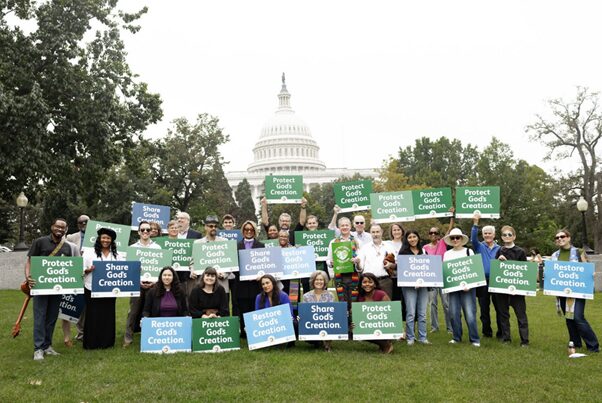
“Restore / Share / Protect God’s Creation” – 2025 public event by CJM calling for the administration to take bold action for creation care. Source: CJM, Executive Director Avery Davis Lamb.
This in turn was pertinent in light of the findings from a recent poll of religious American citizens who were asked about their views on climate change. While 70% of respondents said that they believe the Earth is getting warmer, only 48% believe this is because of human activity.
Among Christians, 85% believe God gave humans a duty to protect and care for the Earth, yet only 54% find stricter environmental protections worth the cost. And despite the longstanding presence of environmental stewardship in Christian values, the dominant Christian discourse in the United States appears largely apathetic – or actively hostile – towards the climate crisis.
A recent study published in the Proceedings of the National Academy of Sciences also documented that while up to 90% of Christian leaders believe in anthropogenic climate change, only around half have ever discussed this with their congregations, and only a quarter have mentioned it more than once or twice. Within congregations where climate change was discussed, a reported 35% of listeners were apathetic or uninterested, 27% were suspicious or resistant, and 10% were hostile towards hearing about climate change in sermons.
Some religious leaders who delivered such sermons have also described being threatened with angry letters and firing. It is clear from such figures that caring for the Earth is a marginal position to hold, both politically in the country but also within the Christian faith.
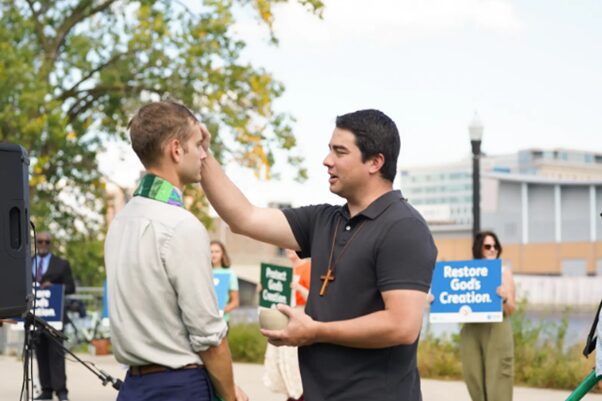
“Restore / Share / Protect God’s Creation” – 2025 public event by CJM calling for the administration to take bold action for creation care. Source: CJM, Executive Director Avery Davis Lamb.
For those of us engaged as scholar-activists in the field of environmental justice, we may benefit from a reminder of the crucial historical role played by Christian churches and their congregations in the struggle against environmental racism, and later for environmental justice in the U.S., where the term first emerged. This history receives perhaps less attention in contemporary environmental justice scholarship (although perhaps less so in grassroots activism).
In particular, we acknowledge the decades of work by civil rights and faith leader Rev. Benjamin Chavis Jr., who in the late 1980s coined the term ‘environmental racism’ that paved the way for the broader notion of environmental justice (even as environmental racism remains as important today).[i] Rev. Chavis was responding to a groundbreaking 1987 report by the Commission for Racial Justice of the United Church of Christ. The analysis documented for the first time the systemic connection at the national level between race and the sitings of toxic facilities – above and beyond class.
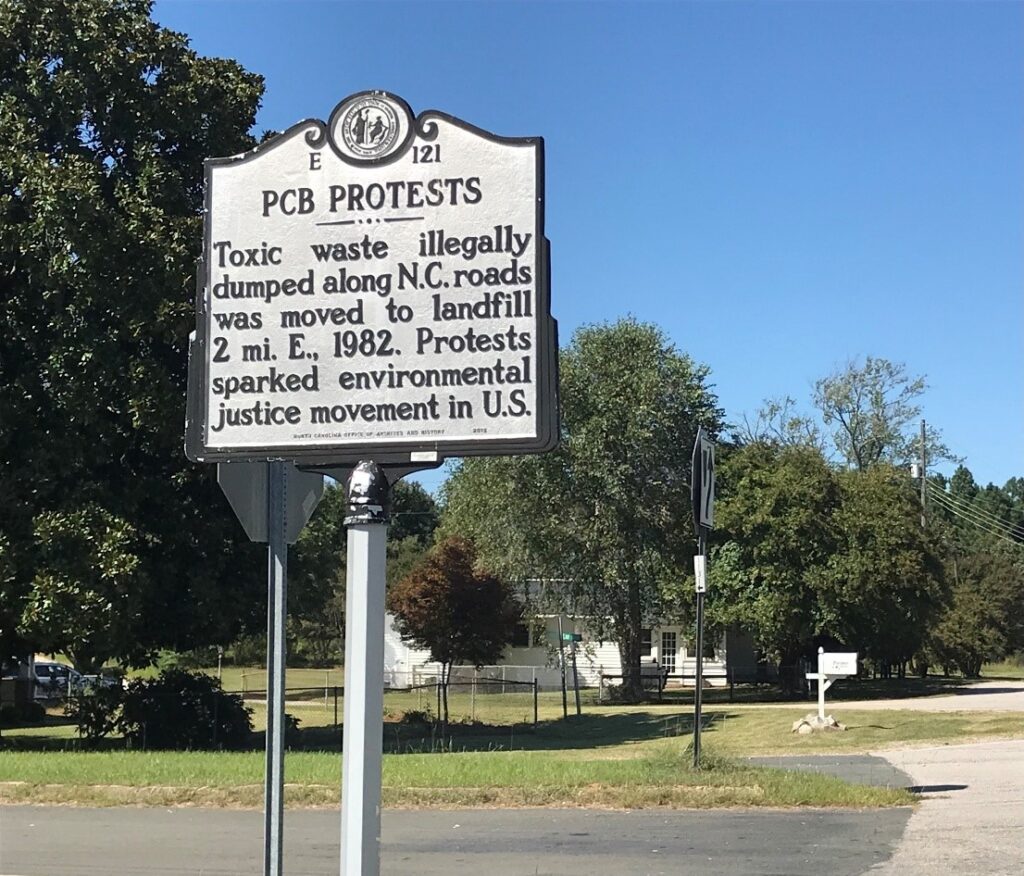
A plaque dedicated to the protests against PCB dumping in Warren County, North Carolina. Source: Wikimedia Commons/ Creative Commons.
The report noted, for example, that three out of every five Black and Hispanic Americans lived in communities with uncontrolled toxic waste sites. At the press conference presenting Chavis’ charge, he described this situation as, “an insidious form of institutionalized racism. … in effect, environmental racism”. Even earlier, we recall the important role of African American Protestant churches as critical sites of organizing and mobilizing in the now famous 1982 protests against a PCB landfill in Warren County, North Carolina.
Relatedly, eco-theology, which for decades has helped draw attention to the intersections of religious faith and environmental concern, is nothing new in the U.S. The field coalesced in the 1960s, most famously through the works of U.S.-based Islamic scholar and philosopher Seyyed Hossein Nasr and U.S. historian Lynn White, and developed throughout the 1970s-80s.
A narrowing landscape for eco-theology, and an ‘indecent eco-theology’ as a critical response
However, the contemporary political landscape is sharply narrowing the space for articulations of eco-theology attentive to the climate and related crises. Under the Trump administration, Christian right-leaning nationalism is growing, and those who challenge the destruction of the Earth in their theology are likely to become further marginalized.
Upon returning to office, Trump continues to solidify the entanglement between right-wing nationalism and Christianity. Recent policies under the Trump administration, such as defunding faith-based environmental programs and empowering religious leaders who frame ecological protections as anti-Christian, have reinforced a theological culture in which domination and extraction define human relations with the rest of nature.
Our entry into this context was also influenced by Margrethe’s recent theorizing of what she dubbed ‘indecent eco-theology’ (IET): a critical theological approach centering the experiences of especially marginalized groups in (re)defining Christianity alongside action toward eco-justice. This made CJM as a case organization also relevant, given IET’s attention to the Christian faith.
In brief, IET emphasizes an action- and practice-informed Christianity, inspired by Argentinian theologian Marcella Althaus-Reid’s ‘indecent theology’ foregrounding a queer, liberatory, and street-based God-walk (as opposed to merely God-talk). Althaus-Reid maintained that theology does and should begin outside academic walls and halls of institutionalized power, which may engender ‘indecency’ in the eyes of powerholders – although Althaus-Reid rather recognized and celebrated less formalized knowledge/praxis.

A portrait of Argentine theologian Marcella Althaus-Reid, writer of the book ‘Indecent Theology’. Source: Wikipedia/Creative Commons.
Birkler’s IET similarly suggests that environmentally-engaged congregations can be the primary source of theology and encourages new insights of Christianity that emerge from activism. The IET framework also acknowledges the queerness and liberatory aspirations in Althaus-Reid’s indecent theology. Her queer theology, characterizable as “ruptures rather than reconciliations with structures that cannot be reformed”, articulated a sharp critique of the dominant social, religious, and political systems of the Global South- even speaking out against the limitations of liberation theologies.
Grace Ji-Sun Kim and Susan M. Shaw’s explicit attention to intersectionality provided IET with additional analytical purchase. Their ‘intersectional theology’ calls for attention to the complex social categories that inform and legitimate the production of particular knowledges, shape the daily experiences of various groups, and assert an ecclesiology (i.e. the study of the Church) that embraces difference and centers social justice.
With the notion of eco-justice in mind, IET is also informed by Laurel Kearns’ conceptualization of the term as equitable relations in God’s kindom (as opposed to the more hierarchical term ‘kingdom’) amongst humans but also between humans and the vast realm of creation.
Crucially, this perspective brings other species and ecological systems into the realm of justice, thereby moving beyond the historical anthropocentrism of environmental justice and toward what some secularly conceive as ecological or multispecies justice. We thus used the IET as a lens to examine the theological praxis of Creation Justice Ministries (CJM) in the context of the U.S.
Insights from the theological praxis of Creation Justice Ministries
Our work resulted in the publication of an academic paper entitled “We can’t be quiet. We can’t sit back.”: Examining the Indecent Eco-Theology Praxis of Christian Environmentalists in Trump’s America. While the main focus of the article, published in the theological journal Dialog, became to advance ongoing theological debates[ii], it also generated important reminders for those of us operating within the more secular environmental and environmental justice scholar/activist terrains. It further showcased the perspectives of those from the faith community, and the contemporary potential for secular and faith communities to collaborate toward shared goals.
For instance, while eco-concerned faith groups are marginalized in the broader religious and political order, collaboration with secular environmental groups is viewed by CJM at least as important to nourish shared values and the achievement of political goals, as they have experienced firsthand. The Theological Director described:
“A lot of folks in the environmental community aren’t expecting a faith voice. I think people are pleasantly surprised when we show up, when we show up with numbers, when we show up with energy, when we show up educated on the topics”.
The divisive political climate today likely deters faith-secular collaboration around environmental issues by generating negative expectations of eco-concern, especially on the part of faith communities. Based on CJM’s experiences, informed, organized faith groups should actively explore the potential of partnerships for meeting urgent shared environmental, climate, and social goals. And environmental groups, irrespective of their faith position, should understand that partnerships with groups like CJM are essential.
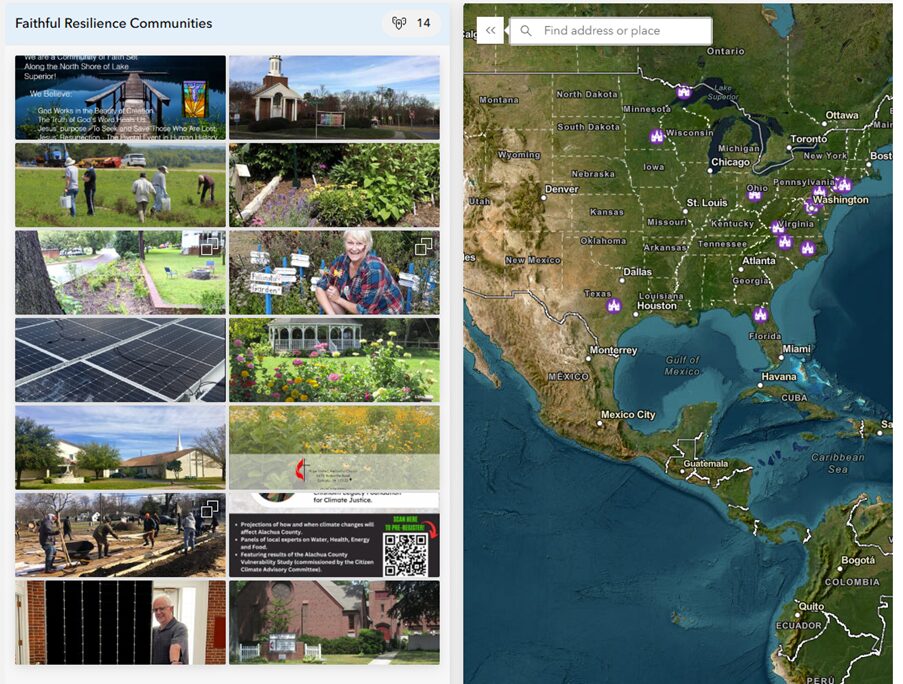
“You are not alone.” CJM mapping of allied churches and faith communities taking action around the country. Source: CJM, 2026: https://www.creationjustice.org/resilience.html
Referring to one of their programs in conjunction with the American Geophysicist Union, called Private Earth Exchange, CJM’s Theological Director described how churches serve as community science hubs:
“themselves identify[ing] environmental issues that are happening in their community, and are then paired with community scientists.”
He described the multiple benefits of such collaborations:
“One, it’s really empowering to these churches to believe that there are solutions that they can be a part of.”
Nourishing a sense of efficacy is integral for mobilization. Another benefit is amending their understanding of the “false and artificial divide between faith and science.”
CJM’s work with other faith communities who may not yet connect the need for ecological care to their existing concerns and efforts, such as those related to racially-based injustices, offers insights into framing and communication of broad relevance for change-making. The Theological Director emphasized that many conversations other faith communities are having today, are just “one degree away from a climate conversation” – be it hunger, poverty, or racial equity.
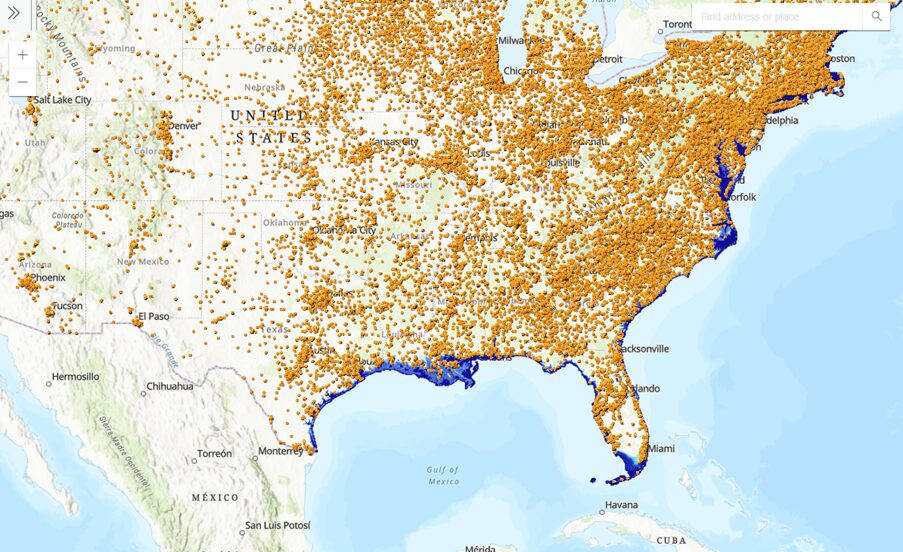
Mapping the Climate-Church Crisis. Source: CJM, 2026 (https://www.creationjustice.org/resilience.html)
To make the connection, to “connect the dots”, requires
“recognizing that the conversation has to start at different places. The conversation starts about air quality, and that Black children are far more likely to have asthma because of air quality issues. The conversation starts at the fact that regardless of income, you are five times more likely as an African American to live near a waste treatment facility. …. And helping people understand that those are environmental issues. Those are Creation issues.”
A similar sentiment was expressed by CJM’s Church Engagement Manager, who stated her intention to bring her experiences from working at an ‘incarnational ministry’ in a Central American immigrant neighborhood outside D.C. into the work at CJM. ‘Incarnational’, here, was related to a doctrine of God where God is understood as being present with and in the world, as a way to “be tangibly present with all of the creation that is around you”.
Personal revelations toward our own scholar/activism
Some deeply personal revelations for us authors also occurred through this process.
I (Rebecca) came to terms with the partiality of my Christian upbringing in an evangelical Christian home and some beliefs so ingrained that I was blind to them. Through this work, I came to realize that while I may have been pleased in what is now my home country of Denmark by, say, the substantial presence of female clergy in the Danish Lutheran Church and its relative inclusion of homosexuality, I subconsciously assessed these as not truly Christian.
I also grasped the tremendous significance of eschatology (part of my new vocabulary!), namely beliefs (note the plural!) about biblical ‘end times’ and the return of Jesus Christ. The version I had been taught foretells a world in decline until the ‘rapturous’ moment of Christ’s return and the ascent of believers, as the rest remain to face devastating ‘tribulations’.
This ‘theology of despair’- in that it effectively precludes a rationale to work for change (apart from conversion to the faith)- was a major rereading of the Bible introduced in the 1800s that over time, became a cornerstone of contemporary U.S. evangelicalism.[iii] Not only does this view deter action for social and ecological justice, it is even interpreted in some faith circles as call to contribute to worsening conditions on Earth, in a hubristic attempt to force Christ’s hand, and his return.[iv]
Yet another view existed, and persists today, albeit in currently marginalized faith communities. CJM’s Executive Director explained to us that the theology of ‘rapture’ is not an orthodox belief but rather relatively new to Christian theology, and runs counter to the understanding of God as a loving creator. He explained:
“I don’t pretend to know what will happen in the eschaton, but I do believe strongly that God (…) made this world out of love (ex amore) and sent God’s son as Divinity incarnate to show what it looks like to intimately love creation — people and planet. It is completely contrary to how I understand God’s character that that same God would burn up the world.”
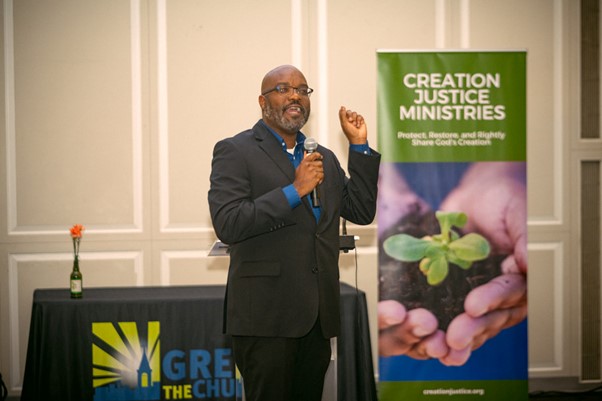
“Protect, Restore, and Rightly Share God’s Creation” – Recent outreach by CJM’s Director of Theological Education and Formation, Derrick Weston; Source: CJM, 2026 https://www.creationjustice.org/theologicaleducation.html
Encountering a U.S. Christian praxis so deeply committed to people and planet was revelatory.[v] While I have not made my way back to the faith, I did come to grasp both the partiality of my upbringing, and the way in which it undermines solidarities across secular and faith movements.
I (Emily) was delighted to learn of progressive, climate-aware Christians through this work. In conducting this research, I was surprised to find religious organizations that were entirely dedicated to acknowledging the climate crisis in their work, particularly as the Christian context I grew up in was hostile to these conversations.
Furthermore, finding theological work such as Althaus-Reid’s, which not only accepted marginalized perspectives but centered and uplifted these communities, was revelatory for my own relationship to faith and spirituality as a part of the queer community. This work ignited a passion and interest to continue working in this space, focusing on practical theology and ‘God-walk’ that might examine indecent theologies and their connection with the climate crisis.
Growing out of this research, I have taken up practicing restorative rituals, working alongside progressive theological organizations, aiming to acknowledge the climate crisis in small ways, communing with nature, community, and stillness. Through this, I realized the importance of silence, the more-than-human in faith, and found my way to a form of religion that feels aligned with who I am.
Lastly, I was encouraged by the ability for so many diverse areas of research and ‘fields’ to blend in this work. Though many of my peers were confused about the connection between religion and climate change, I found weaving this interdisciplinary web incredibly rewarding and meaningful, and this has opened my eyes to the ways that scholars can collaborate between fields previously thought to be distinct, such as science and religion.
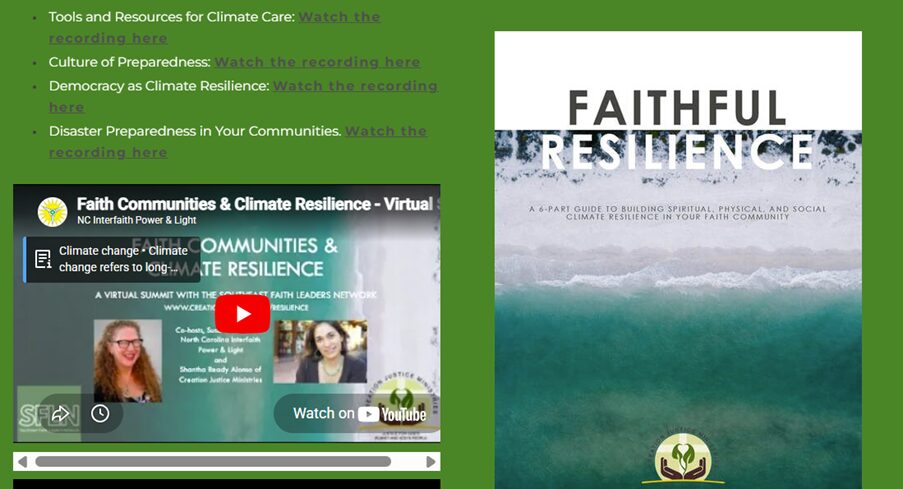
Some resources provided by CJM for cultivating ‘faithful resilience’ through community mobilizations. Source: CJM, 2026 (https://www.creationjustice.org/resilience.html)
And I (Margrethe) explored the potential of empirical data collection, which is less common in the theological scholarship normally related to the subject of Dogmatics at the department I am connected to at Aarhus University. It was a truly enlightening experience to undertake an application study of a theory I had previously proposed. Suddenly, the theory was not only alive at my own desk at my office, but in the “real” world among faith communities.
This experience, furthermore, made me aware of a blind spot in the proposal of my theory of IET: if indecent theology is truly God-walk, and not merely God-talk, empirical data collection is vital to the study of it. While I had previously relied on the empirical studies of others in my work on IET, I was now challenged to produce this empirical data in collaboration with Rebecca and Emily. Here, I was reminded of the importance of interdisciplinary collaboration – not only in the data collection and analysis, but also across the different phases of discussing the impacts of our findings both as scholars and in relation to our private lives and the place of religion in them.
Through undertaking this study with Rebecca and Emily, I was not only reminded of the importance of collaboration but also faced with the need for scholarship to not be limited to the confines of my own office.
Speaking collectively once more, we acknowledge that this research collaboration came forth from a place of curiosity, and maybe a little uncertainty. Yet the interdisciplinarity and especially the cooperation across faith perspectives were unexpectedly giving, bringing an injection of new insights and momentum to our scholar/activism. We share these reflections in the hope that they may inspire others in the political ecology, justice, and faith communities to keep reaching across the aisles.
[i] One of the more recent examples of environmental racism in the U.S. context is the ongoing ‘water crisis’ of Flint, Michigan.
[ii] Specifically, we document the iterations between their practice and theological perceptions, advancing an interdependence with the more-than-human world while destabilizing dominant theological assumptions of the linear path from perception to practice. We also explore how they understand and mobilize ‘justice’, intersectionality, and engage with marginalized groups and the more-than-human world. Throughout, we draw insights to advance IET. Our findings thus reveal the organization’s resonance with IET alongside the particularities that emerge from a situated case study that are fruitful for further theoretical development.
[iii] Also known as premillennialism; listen to the helpful NPR Throughline podcast, Apocalypse Now, from 2019. Also see the work of sociologists like Gorski and Perry (e.g. their 2022 book, The Flag and the Cross: White Christian Nationalism and the Threat to American Democracy) and Arlie Hothschild (e.g. her 2016 book, Strangers in Their Own Land), who through quantitative, historical, and/or ethnographic research elaborate upon the history and current significance of end-times beliefs, with insight especially into the context of the USA.
[iv] Paradoxical to a position of disengagement, some evangelical leaders’ interest in gaining political power became apparent by the 1980s, coalescing around strategically determined issues that might rally Christian constituents – in particular the issue of abortion (despite that evangelicals were unopposed to abortion as recently as the 1970s). The election of Ronald Regan was a linchpin in this transformation.
[v] For me, this learning occurred both through getting to know the work of Christian environmentalists like the staff at CJM, but also through the many encounters with Margrethe, that came to push at my own firmly held beliefs about what counted or not as authentic faith. Margrethe’s sharing of her ambiguity regarding the Church, accompanied by such certainty of faith, was especially instructive.