By Mariana Riquito, Michelle Geraerts, Margueritte Mpah Njanga, Ilaria Sartini, and Jeltje van der Haer
A conversation with ecofeminist scholars from Senegal, Sápmi and the Netherlands show “green” energy runs on appropriation of women’s unpaid labour, dispossession of Indigenous land and residents’ lack of participation, and point to alternative energies built around care, reciprocity and an ethics of taking only what’s needed.
This interview piece is the result of a collective conversation initiated during the roundtable “Ecofeminist Ethnographies of “Green” Energy Projects,” at the 2026 EASA Conference, co-organised by Mariana Riquito and Michelle Geraerts, with the support of Gea Piccardi and Zane Datava.
Inspired by scholars who demonstrate and challenge the violence of centering white, (petro)masculine relations to technological progress and geological relations in responses to what is sometimes called the ‘Anthropocene,’ we were interested in bringing an ecofeminist lens to discussions around the topic of energy transitions, or — more aptly perhaps — energy projects, considering the many additions that come with assumed ‘transitions’ away from fossil fuels.
Three questions came to guide our round table conversation at EASA, also structuring the interview below. Responses are given by Margueritte Mpah Njanga, whose work is a gendered analytic of the processes of installation of mini-solar grids in rural Senegal; Ilaria Sartini, who works together with her colleague Per-Henning Mathisen from the Sámiráđđi (Saami Council) towards environmental justice in the context of wind turbine projects in Sápmi; and Jeltje van der Haer, who focuses on often overlooked intersecting social dynamics of the adoption of heat pumps in Dutch households.
Our conversation is inspired by and complements broader ecofeminist efforts in anthropology and related fields, that trouble the hierarchies brought about by dichotomous understandings of nature versus culture and the relation of this modernist logic to sexism, racism and ableism. The ethnographic material from various sites and dynamics show how gendered the storytelling on energy technologies can be — and, in doing so, they open up space for reimagining technology as relational and entangled with lived experience, countering the oversimplifying linear and top-down imposition of high-tech ‘solutions’
1. What are the most significant contradictions and injustices surrounding the “green” energy transition that your ethnography reveals, and which are systematically covered up/erased/denied by dominant narratives?
Margueritte Mpah Njanga: My ethnography shows that the green energy transition in rural Senegal is marked by a central contradiction. Solar mini-grids are promoted as clean and inclusive tools for development, yet their rollout often repeats colonial, patriarchal, and market-driven inequalities. The dominant story highlights “access,” “sustainability,” and “clean energy,” but what people actually experience is that electricity projects are shaped by investor interests, bureaucratic requirements, and selective geographies of profit. The most significant injustice is that women’s unpaid labor absorbs the failures of these infrastructures. In villages lacking water, electricity, transport, or working machinery, women and girls become the hidden infrastructure that keeps daily life going. They fetch water over long distances, carry babies while working, shell peanuts by hand, keep households running, and make up for missing public services. This reality, in which women’s bodies could be described as standing in for “transportation, storage, distribution, and social reproduction,” is systematically erased by dominant green transition narratives, which count the number of installed mini grids but do not count fatigue, waiting, walking, carrying, cooking, caring, or lost time.
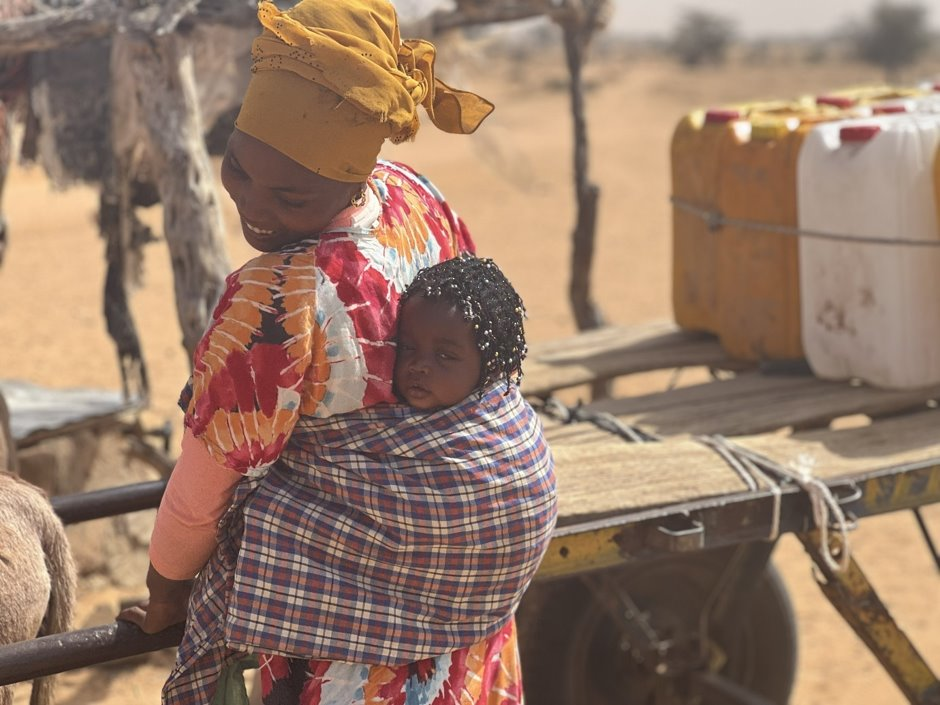
Figure 1. 16-year-old girl with baby on her back loading water jerry cans filled with water on cart after a 4-mile journey from her village. Source: Margueritte Mpah Njanga.
A second contradiction is that “green” projects may arrive before more urgent infrastructures, especially water. One woman said, “We do not have electricity in my village, but I need water more.” Such statements reframe the transition from the perspective of lived needs rather than institutional planning. The injustice here is not that electricity is unwanted, but that electricity is treated as a separate solution while women see energy, water, food, health, income, and care as interconnected.
A third injustice concerns participation. Consultations and meetings are officially described as “community participation.” But in practice, men, chiefs, and local dignitaries speak for the village while women serve water or milk and then disappear from the discussion. Women are the main users of energy, but they are not treated as legitimate energy experts. So, the “inclusive” green transition can repeat the colonial and patriarchal pattern where male authority is recognized as the voice of the whole community.
Ilaria Sartini: Our research takes place in Sápmi, in Finnmark, in the Arctic. Finnmark is the northernmost county of Norway. This land is home to the Indigenous Sámi communities whose culture, way of living, and identity are deeply interconnected with the land, sea, and coastscapes. Today, the region is increasingly targeted for large-scale wind park developments, positioning it as a strategic frontier in the European Union’s ‘green transition’ and future energy strategies. However, these projects often generate tensions between climate goals, the rights of Indigenous Peoples and local visions of sustainable living and self-determination.

Figure 2. “Rástegáisá: protector of the reindeer mothers”, 2022. Displayed at the Sámi Museum Siida in Anár/Inari, Finnish side of Sápmi. Source: Jouni S. Laiti.
The moral legitimization that pushes for the construction of windparks on Sámi Peoples’ homelands is guided by the need to drift away from fossil fuels. While we do not question the importance of drifting away from fossil fuels and we acknowledge the need to go towards more sustainable ways of inhabiting this planet, our research reveals how the narrations supporting the discourse of the energy transition are embedded in contemporary power dynamics in turn reinforced by a history of colonialism and forced assimilation (norwegianization) in this part of the region. These narrations can be identified on three different levels: at the EU level, at the national level, and at the corporate level. With the EU Green Deal and the EU Critical Raw Materials Act, once the projects connected to the “green transition” are labelled as “strategic”, either mines to extract minerals needed in the transition (like the Nussir mine case) or wind parks, get fast tracked. This labelling triggers fast-tracked bureaucratic approvals, drastically shortening timeframes for environmental assessments, consultation, and local consent. This, together with the classification of northern regions as Scarcely Populated Areas (SPAs) – an administrative shorthand that subtly revives terra nullius[1] logic, framing Indigenous homelands as empty, available space ready for industrial expansion.
Second, at the national level, Norway wants to position itself as a producer of clean energy, with production facilities and mines for the resources for the facilities and infrastructures to reach them, very much present in Sápmi. So, while the country has started the process of Truth and Reconciliation, acknowledging the systematic violence committed towards Sámi people, at the same time it engages in practices that result in encroachment and (deliberate)[2] pollution of Sámi land, resulting in what scholars and activists define as green colonialism. It seems that Sámi and, in general, Indigenous Peoples’ rights, are optional in the so-called “green transition”.
Finally, at the corporate level, wind power companies frequently construct narratives framing Sápmi as a vast, underutilized, and remote periphery, echoing historical ‘terra nullius’ discourses. Furthermore, developers fail to establish transparent consultation frameworks or secure Free, Prior, and Informed Consent (FPIC) before undertaking construction or extraction activities on traditional Sámi land, as the infamous Fosen case has demonstrated.
Jeltje van der Haer: In my ethnography, the contradiction between the way the heating transition is positioned in policy and the way it is experienced by households is striking. Policy discourse on the heating transition often focuses on the right (financial) incentives to roll out the adoption of green heating technologies in households and technologies such as the heat pump are often positioned as a prudent investment for responsible homeowners. In practice, however, the transition from heating homes with high temperature gas boilers towards heating homes with low-temperature heat pumps, also comes with a change in sensory experiences, everyday practices, and attachments, which receives little attention in policy discourse.

Figure 3. “It does not feel like 20 degrees!”. Source: Jeltje van der Haer.
One of the main findings of my ethnography of heat pump adoption in the Netherlands is that when individuals lack agency and ownership over their heating transition, the changes in practices and sensations that come with changing heating technologies are experienced as significantly more disruptive. The positioning of the heating transition as techno-financial project, i.e., as transition through technology substitution and incentivised as financial investment, lends a sense of ownership to a narrow group of individuals; not everyone is able to identify with this narrative. In my ethnography, contradictions and injustices come to the forefront as structured by differences in caring labour, experiences of agency, and intersecting axes of gender, class, tenure status, and health.
2. What does an ecofeminist and decolonial/anticolonial perspective make visible that more conventional—or even critical—approaches to energy transitions tend to overlook? For example, in your research, how do concepts like care, interdependence, embodiment, and reciprocity reshape our understanding of green—or even just—energy transitions?
Margueritte Mpah Njanga: An ecofeminist and decolonial perspective reveals that energy transition is not just about technology, carbon, grids, or finance. It is about bodies, labor, care, colonial memory, voices, and the unequal distribution of exhaustion. Conventional approaches might ask whether a village has electricity. My ethnography asks: whose labor made life possible before electricity came? Who pays the bodily price for missing infrastructure? Who is heard when energy futures are planned? Who gains from “green” investment, and who is left with unpaid work?
Care becomes central because women’s energy labor is not just domestic work; it is the basis of social survival. Fetching water, feeding children, cooking, preserving milk, preparing crops, and keeping households running are all energy practices. Interdependence also becomes clear: electricity only matters when it connects to water pumps, refrigeration, food processing, credit, markets, and women’s income-generating activities. Energy justice, then, is not just connecting to a mini grid; it is the ability to live, work, preserve food, reduce labor, and act with dignity.
Embodiment changes the analysis because the lack of infrastructure shows up in women’s bodies: fatigue, waiting in the heat, carrying water, breastfeeding while working, and losing time that could have gone to education, paid work, rest, or childcare. Reciprocity appears as a different ethic: development should not take women’s compliance, patience, and unpaid labor while offering only uncertain promises. A just transition would recognize women’ situated and acquired local knowledge of their primary needs and return real benefits to those who keep daily life going.
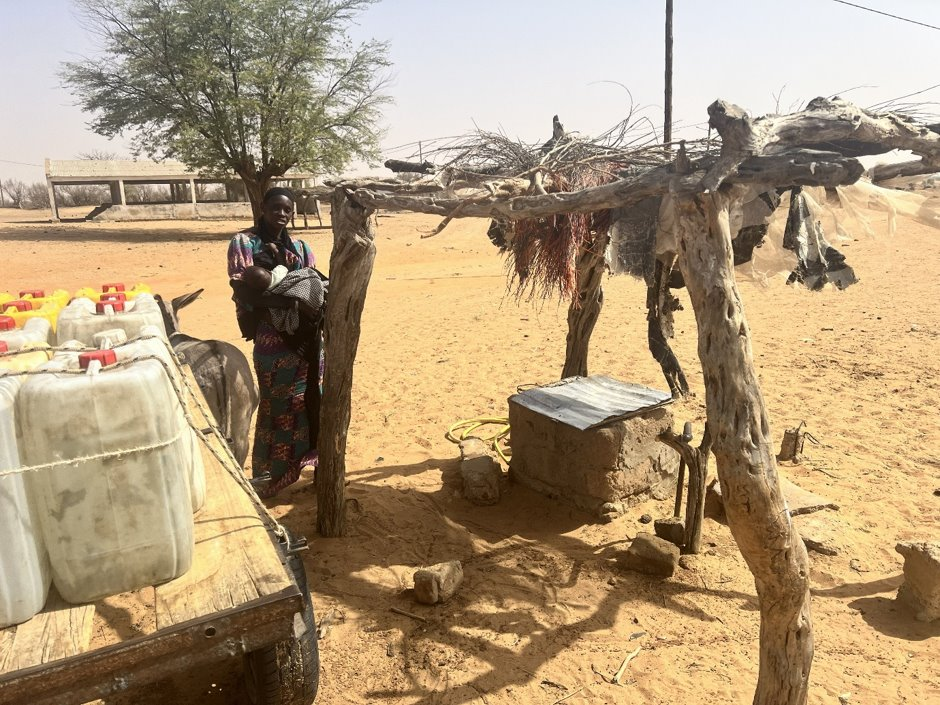
Figure 4. 15-year-old girl breastfeeding her baby standing by a borehole and her cart already loaded with water jerry Cans. Source: Margueritte Mpah Njanga.
Ilaria Sartini: The narrative surrounding the global energy transition presents a clear mandate: we must rapidly build out renewable infrastructure and extract critical minerals to abandon fossil fuels. Yet, viewed through the analytical lenses of ecofeminism and decoloniality, a troubling structural reality emerges behind this green facade. The current implementation of the energy transition frequently perpetuates unjust power dynamics, reproducing patterns of oppression better described as green colonialism, a system that systematically disregards Indigenous Peoples’ rights, lands, and sovereignty with the moral imperative of ecological salvation.
Decolonial and ecofeminist perspectives expose how capital moves across space and the precise narratives it deploys to legitimize its expansion. To justify industrial developments like wind parks and mineral extraction on Indigenous Peoples’ homelands, corporate and state actors rely on a familiar strategy: framing these environments as vast, empty and undeveloped. By depicting regions like Sápmi as remote peripheries lacking people, meaningful industry, or governance, capital invokes a modern variation of the colonial doctrine of terra nullius. This shows that the patriarchal-capitalist system needs a good dose of authoritarianism and exploitation (of land, humans, and more-than-humans) to reproduce itself, also in this so-called ‘transition’.
This deliberate “making of peripheries” is essential to the extractivist logic: it transforms living ecosystems into sacrifice zones and normalizes the exploitation, colonization, and marginalization of non-Western ways of knowing, particularly those that do not serve the demands of capital growth. Ecofeminism helps us understand that energy and the way this is produced is not an abstract, neutral input into an economy; it is deeply embodied, affective, and political and drenched in the authoritarian desire to conquer nature and violently reject any knowledge system that does not serve the reproduction of the system.
Our research is carried out within the BIRGEJUPMI project, which is the North Sámi word that refers to the ways to manage/get by. It embodies the principle of taking only what is necessary from nature, ensuring the ability to harvest again in the future. It is a principle centered in care, relationality and reciprocity. For those operating from non-Indigenous backgrounds, ecofeminism and decoloniality provide critical tools to deconstruct Western cosmologies from within. They allow non-Indigenous allies to recognize how the patriarchal and colonial capitalist systems degrade both human communities and ecological health, while offering a framework to stand in active solidarity with sovereign Indigenous Rightsholders.
True alliance requires recognizing Indigenous Knowledges on their own terms, without attempting to define, appropriate, or dominate them to fit Western institutional frameworks. By making evident and dismantling the logic of green colonialism and supporting self-determined Indigenous sovereignty, we need to begin to cultivate an energy transition grounded not in continuous extraction, but in genuine justice, care, and reciprocity.
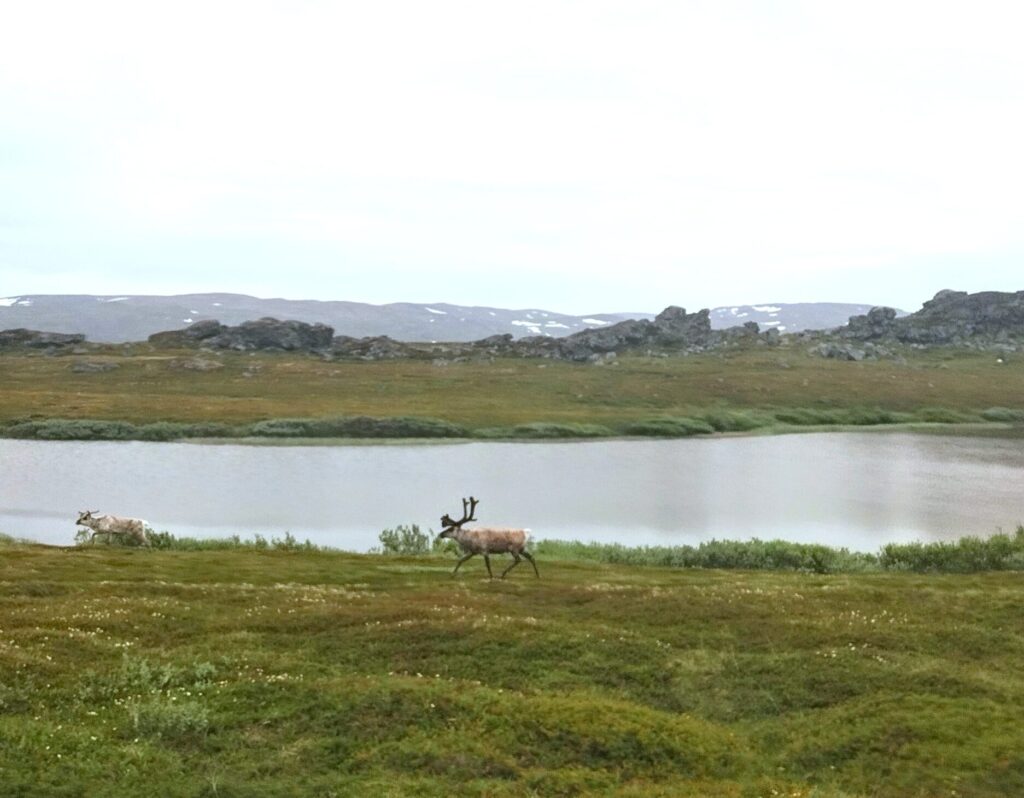
Figure 5. Reindeers around Strommavuotna/Kongsfjord, July 2025. Reindeers and reindeer herders are highly affected by the windparks as these encroach the grazing land. Reindeers are scared of the wind turbines and tend to avoid them, and they are limited to certain areas and they do not have enough food. This means that herders have to use snow mobiles, track the reindeers and bring them store-bought food, hoping the animals will eat it before it freezes up or that other animals will eat it. This raises the costs of herding, drifting people away from the business. This way Sámi culture itself is threatened as reindeer herding is a traditional Sámi activity, vital part of the Sámi culture. Source: Ilaria Sartini.
Jeltje van der Haer: It is important to keep emphasising that heating homes is inherently related to care. For instance, warming a child’s bedroom before they wake, keeping a window cracked for fresh air, lowering the thermostat to afford other things, or making sure a pet can find a comfortable spot for a nap. The way in which heat pumps heat up homes, but also the way they look, sound, and feel, differs significantly from the gas boiler that is commonly their predecessor in Dutch households. This may cause disruptions to heating routines, familiar sensations of tangible change in temperature as well as associated values, meanings or emotions. Traditionally gendered practices and labour might come into conflict with prescribed use of the new heating technology and notions of energy efficiency. For instance, practices such as heating up children’s pyjamas on the radiator or leaving a window open at night may change or no longer be possible.
Furthermore, my ethnography highlights the contrasts between the experiences of tenants and homeowners. Tenants generally have fewer opportunities to anticipate embodied changes to their home environment and find it harder to identify with the broader project of the energy transition as a source of pride and individual responsibility. Homeowners in my fieldwork could take months to explore their options and anticipate the changes in practices and sensations associated with heat pumps. They went to showrooms, listened to different models, visited acquaintances with heat pumps, and joined user forums. Homeowners were also able to actively reframe uncertainties and discomforts as downsides of pioneering and taking responsibility in the energy transition. In contrast, tenants in my fieldwork more frequently described the change in heating technology as disruptive and expressed the sentiment that this transition felt rushed and imposed on them.
An ecofeminist perspective allows us to uncover how new technologies may interact with relations and caring practices in the household, as well as who is doing the work of adapting in light of green energy transitions. Furthermore, this perspective makes visible that embodied and emotional dimensions play an important role in green energy technology adoption, but is often overlooked in traditional approaches. And finally, this perspective reveals how the burdens and benefits of the heating transition are unevenly distributed among individuals. For some, the transition produces pride, care, and curiosity. When actors have limited agency, however, it may generate alienation, insecurity, and refusal. These dynamics come to light in contrasts between tenants and homeowners. Homeowners more often describe adoption as moral responsibility, adventurous, and sensible investment, while tenants report alienation, insecurity, and disruption. Within households where members have different control over retrofit decisions, we see that initiators of the transition, most frequently men, experience pride and excitement whereas others, disproportionally women, may experience sensory discomfort and loss.
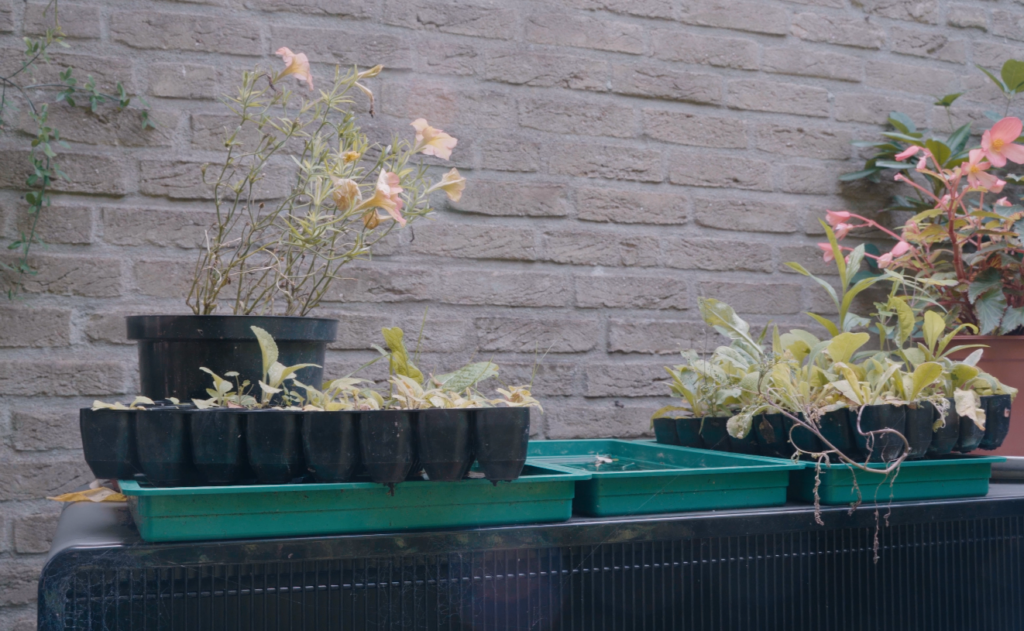
Figure 6. Cultivating plants on top of a heat pump. Source: Jeltje van der Haer.
3. What could energy presents and futures look like alternatively? Can you give an example from your research of how particular communities navigate differently, contest, or reimagine extractive futures?
Margueritte Mpah Njanga: My research suggests that alternative energy futures would start from women’s practical visions of modernity rather than from external project metrics. Rural women do not reject electricity; they redefine what electricity should do. They imagine energy futures built around water pumps, refrigeration units, milk storage, crop and food processing, ice production, affordable tariffs, access to credit, and locally viable businesses.
A strong example is the repeated hope across villages for fridge-freezers, ice bags, and refrigeration units. At first, this might seem modest, but my analysis shows it is a sophisticated economic vision. Ice is tied to heat, fasting periods, daily consumption, food preservation, income generation, and freedom from exploitative middlemen like the “bike man” who sells expensive ice from across the Gambian border. Refrigeration would also let women store milk, cut waste, sell in bulk, and negotiate better prices instead of depending on buyers who “pay peanuts.”
Another example is women challenging bureaucratic development through their scepticism toward GIE/IEG[3] registration. They know that formalization often requires time, travel, identity cards, and fees, without any guarantee of funding. Their refusal or doubt is not ignorance; it is political knowledge formed through many broken promises.
So, an alternative energy future in this ethnography would be one where women meet separately if needed, speak in spaces where their voices are heard, and shape projects before they are designed. It would treat electricity not as a symbolic start or a modern technical endpoint designed and promoted by Western agendas and funding, but as part of a wider ecology of water, care, income, storage, mobility, dignity, and local autonomy.
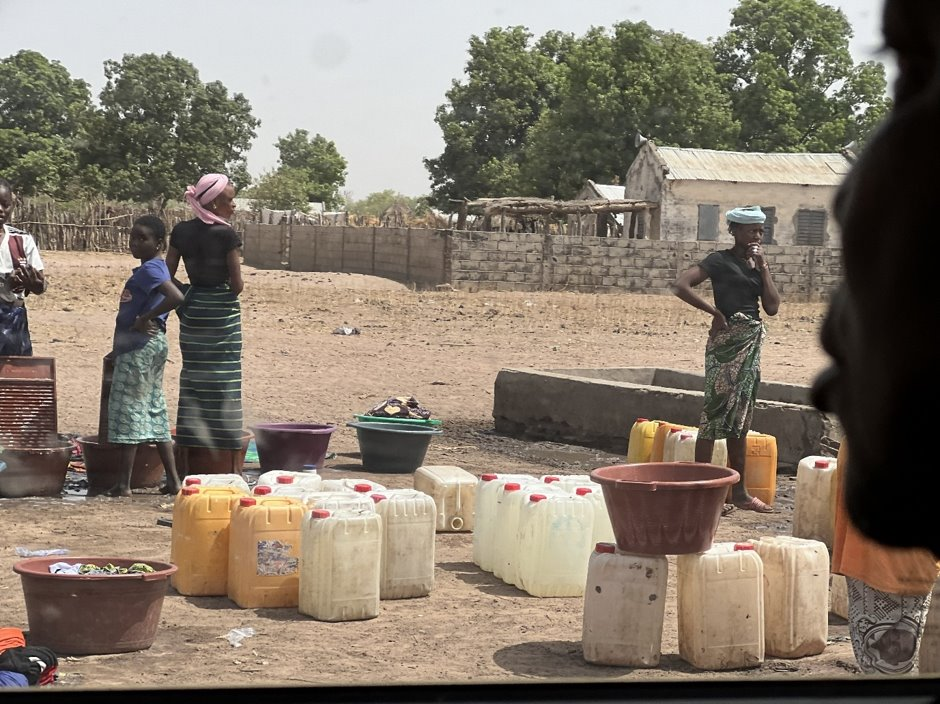
Figure 7. Women at the village water point, doing laundry, surrounded by jerry cans and waiting for the water to start running. Source: Margueritte Mpah Njanga.
Ilaria Sartini: When we ask what alternative energy futures look like, we must first look at how communities today navigate the pressures of the “green transition”. In our research, this plays out through two different paths taken by neighbouring Arctic municipalities facing similar regional pressures.
On one side, we see an approach shaped by economic precarity and a history of Sámi cultural assimilation. Here, the municipal leadership aligns with the statal and industrial narratives of green growth. Wind turbines and expanded power lines are embraced as necessary trade-offs for economic survival: a logic that views the local landscape primarily through its productive and monetary potential.
On the other side, we witness a paradigm rooted in cultural continuity and Indigenous self-determination. In this municipality, resisting grid expansion and large-scale energy infrastructure is not a rejection of sustainability, but a defence of it. Here, energy presents and futures are reimagined around relational accountability to the land, traditional livelihoods, and the recognition that industrial infrastructure often perpetuates historical patterns of colonialist and exploiting logics.
The dynamic between these two approaches reveals a fundamental truth: a genuinely just energy future cannot simply replace fossil fuels with renewables using the same extractive logic. It requires us to listen to communities that insist on futures where land is not treated as a commodity, and where municipal survival is not contingent on ecological fragmentation.
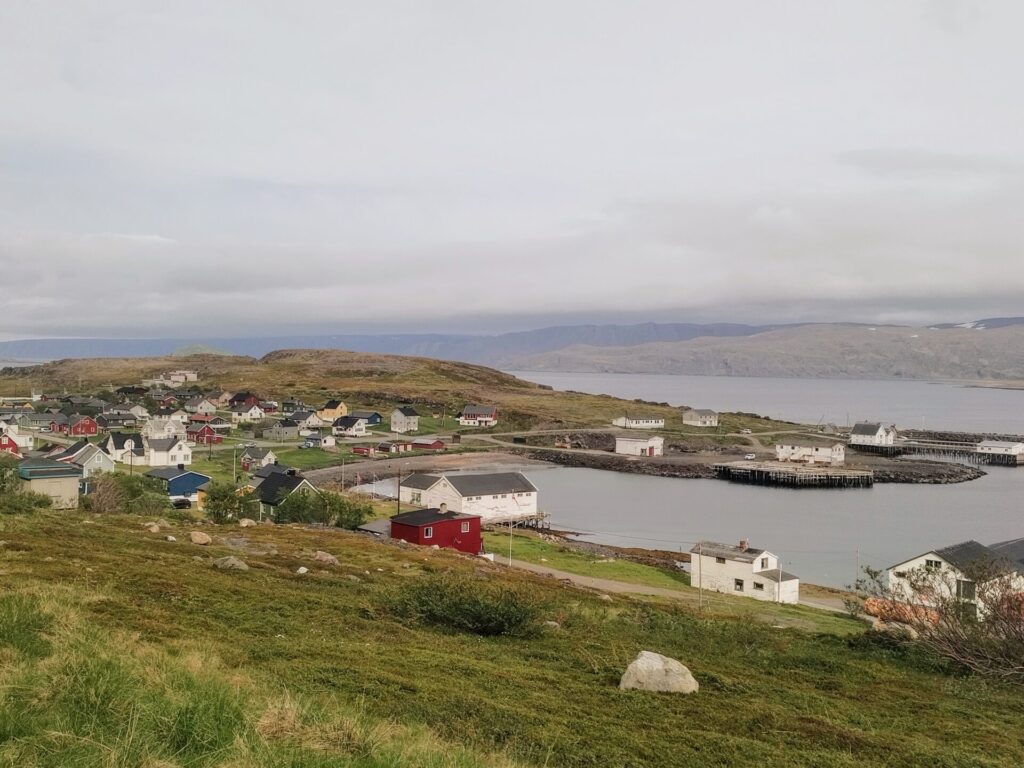
Figure 8. Strommavuotna/Kongsfjord, July 2025. There are plan proposals to build a windpark on the hills in front of the village and a hydrogen pier in the village. Source: Ilaria Sartiri
Jeltje van der Haer: In my fieldwork, some practices that contest or reimagine dominant visions of heating futures could be identified, especially around heating- and energy collectives experimenting with collective forms of heating, and better integration of heating technologies into homes. What I find hopeful is that the energy transition is taken up here as an opportunity to “do things differently” through experimenting with commoning, grassroots participation, and building forms of solidarity around heat. At the same time, we must note that the most vulnerable households currently have the least room to actively anticipate and negotiate changes associated with heat pump adoption or partake in collective experimentation.
If we want more just and imaginative heating futures, we have to take seriously the ways in which the heating transition interacts with notions of care, everyday practices, embodied experiences, and interdependencies within and between households, of both human and non-human actors. Imagining heating futures through the lens of care and solidarity rather than efficiency alone opens up space for alternative, less extractive presents and futures. Rather than putting a greener mask on existing logics, this allows us to envision true alternatives to the ways we live.

Figure 9. A more-than-human encounter. Source: Jeltje van der Haer.
Conclusion
These fragments are glimpses of what the so-called ‘energy transition’ is looking like in practice — taken together, they offer not an abstract account of the energy transition, but a collection of situated and embodied stories of how energy projects are lived, negotiated, resisted, and reimagined in particular places and through particular bodies. From women’s experiences of exhaustion, unpaid labour, and exclusion from decision-making in rural Senegal, for whom water matters more than the top-down-decision of implementing electricity; to Sámi struggles over land and sovereignty in relation to the expansion of wind turbines, deeply embedded in a long colonial history; to the differentiated experiences of individuals navigating heating transitions in the Netherlands, these contributions make visible the inequalities that are often obscured by dominant narratives of “green” progress. They show that energy transitions do not affect everyone equally: gender, class, colonial histories, Indigenous status, or tenure shape who benefits, who bears the burdens, and whose knowledge and needs are recognised. Fundamentally, then, these stories also reveal how energy projects are never only a matter of technologies or infrastructures — they are always deeply entangled with bodies and the historically situated practices and relations which make them. Hence why telling other-than-master stories is so needed.
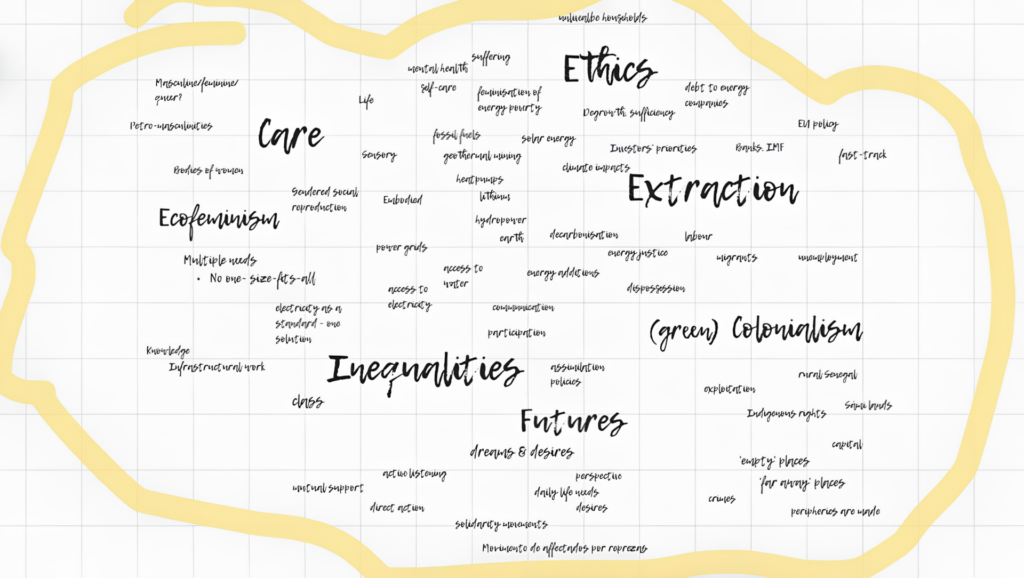
Figure 10. Word map emerging from our conversation at EASA 2026.
Notes
[1] From Latin, “none’s land”, colonialist doctrine used to legitimize lands’ invasion and expropriation.
[2] Norway is among the few countries in the world that still grants permission for marine waste disposal. The Nussir mine (operated by Blue Moon Metals Inc.) has been given permission to dispose of mining waste in Repparfjord. The mobilization, led by Sámi youth and association, is ongoing and fights for the protection of the fjord, to which livelihoods, human, animal and ecosystem wellbeing are connected.
[3] This is an Economic Interest Group (Groupement d’ Intérêt Économique) that NGOs and government agencies use to formalize women’s groups to release funding for money generating activities. It is burdensome for them, costly and without any guarantee of return.