
By Ana Paula Lemes de Souza
Bodies are traversed, constituted, and often devastated by the same logics that operate upon territories. A reflection on Han Kang’s novel The Vegetarian.
In contemporary critical theory, as Donna Haraway suggests, there is no view from “nowhere”. This essay does not emerge from isolation, but from the fervent conversations of a reading group we organized at the Ecology and Society Workshop (ECOSOC), a political ecology action-research collective at the Center for Social Studies in Coimbra, in collaboration with the ECO Amazonia project. It was there, in the collective reading of The Vegetarian (2007) and the subsequent debate, that the lines between body and territory began to take shape. To situate this text in this context is to admit that interpretation is a collective act, a map drawn by many hands.
In Han Kang’s novel, we are given clues for imagining possible futures in the face of catastrophe. In a world mapped by capital for extraction and control, transforming one’s own body into an autonomous territory constitutes an act of ontological insurrection — a gesture that Yeonghye, the novel’s protagonist, carries to its ultimate consequences.
Yeonghye is described as an utterly ordinary woman, until, to everyone’s surprise, she decides to become a vegetarian. It all happens after a nightmare. If dreams, as the Yanomami remind us, are experiences as real as those in waking life, the protagonist becomes profoundly affected by this experience.
She becomes a vegetarian and begins to embody a silent refusal — she becomes territory — in her quest to erase her humanity and put an end to all patriarchal, sanguinary violence.
Becoming territory is not an act of possession or fixation, but a process of re-existence. It´s to claim the continuity between skin and land, blood and river, refusing the modern separation that turned nature into a resource and the body into a commodity.
And it is in Yeonghye’s embodied journey that we can think of the body as a battlefield.

Poster for the ECOSOC/ECO Reading Group session on The Vegetarian, coordinated by Eliane Sebeika Rapchan, Judy Moura and Ana Paula Lemes Souza
The body as the first geographical frontier
Becoming territory is the affirmation of one’s own spatiality that resists hegemonic logics, such as agribusiness, mining, and other forces that turn regions into territories of death.
The body-territory[i] affirms the inseparability between women’s bodies and the land they inhabit, in an ontological continuity that opposes extractivist violence, historically exercised both over indigenous lands and over female bodies, through colonization and its forms of erasure.
For communitarian feminism, the body is the first territory of defense, the inaugural frontier where patriarchy and capitalism seek to impose their sovereignty. There is no way to defend the territory without guaranteeing women’s autonomy over their bodies, just as there are no healthy bodies in territories poisoned by pesticides or mercury. After all, capitalism feeds on the same logic of extraction: from the subsoil and from women’s reproductive and sexual labor.
Reconnecting with the body and ancestral memory — human, vegetable, animal — is a founding gesture of decolonization, since body and territory liberate themselves together. In the book, Yeonghye decolonizes her body by refusing the food imposed upon her. It’s her way of ridding herself of a father who physically abuses her, a brother-in-law who exploits her sexually and artistically, and a husband who ignores or discards her. To become territory, Yeonghye must die as a human to become a plant, in a process of implosion.
A brutal treatise on the sexual politics of meat
In the narrative, we rarely have the opportunity to hear the protagonist, except for brief fragments of her dreams, signaled in italics. She is narrated, observed, diagnosed, and violated by others. She is a passive territory to be occupied.
Yeonghye’s refusal to eat meat, seemingly simple, triggers a series of eruptions, transformations, and displacements. Her decision is not only ethical but political, rejecting the structural violence that articulates patriarchy and anthropocentrism. That is why her body does not fall ill: it rises up. Yeonghye’s insurgency is structured in three stages, each narrated by a distinct voice throughout the book’s parts.
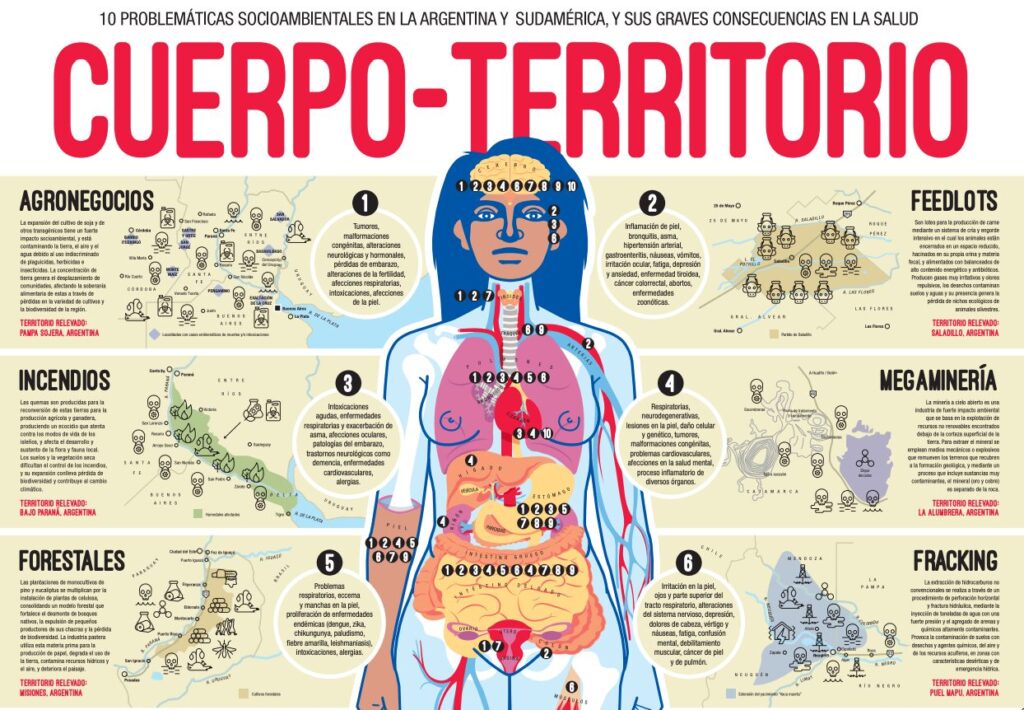
Body-territory map of the health impacts of agribusiness. The work emerged from the exchange between Iconoclasistas and the teachers and participants of the course “Introduction to the Analysis of Health Processes in Extractive Contexts,” organized by the InSSA (Instituto de Salud Socioambiental FCM-UNR) Universidad Nacional de Rosario/Argentina, with the support of the Rosa Luxemburg Foundation. Design and editing: Iconoclasistas. September to November 2020, during the coronavirus pandemic. Source: https://rosalux-ba.org/wp-content/uploads/2021/03/Poster-Cuerpo-territorio.pdf
First stage: the meat
In this first part, the narrator, Yeonghye’s husband, Jeong, describes with clinical detachment the daily life of a woman whose subjectivity is entirely invisible to him. He describes her as “the most ordinary woman in the world”, something he valued because it demanded nothing from him.
Yeonghye’s body appears as a territory of others’ expectations: it must serve, please, fulfill functions. Her sudden refusal of meat functions as a cut in this order, but it’s not read as a choice; it’s treated as a defect, as a body that fails in its obligation to be docile.
From Carol J. Adams’s perspective in The Sexual Politics of Meat,[ii] carnism and patriarchy operate through parallel logics. The animal is silenced and sliced on the plate, while the woman is fragmented and instrumentalized in daily life. Both are reduced to available matter, bodies deprived of voice and transformed into resources.
It’s in this phase that Yeonghye’s first displacement occurs: that of being a woman. By ceasing to cook meat, Yeonghye not only changes her diet but refuses her position as a predator and intermediary of violence. However, the people around her react violently. Her vegetarianism is not “healthy” or “ethical” in the liberal sense; it is an abjection, a horror that destabilizes the order, that breaks the silent pact of service and submission.
The figure of Yeonghye’s father is central in this stage. As a veteran of the Vietnam War, where South Korea fought as a US ally, he embodies state and militarist violence.
Yeonghye’s childhood holds the origin of her refusal: bitten by a dog, she saw her father tie the animal to a motorcycle and drag it to exhaustion to “tenderize” the meat. Later, she was forced to eat the soup made from it, supposedly to cure the bite.
Yeonghye realizes her body is a cemetery of murdered non-humans. The violence she suffered and the violence she was forced to ingest are one and the same. Her refusal of meat is an attempt to interrupt this cycle, to stop digesting violence upon violence.
The dinner scene, where the father forces a piece of meat into his adult daughter’s mouth, in a typical act of food rape, is the literal representation of the violation of the body-territory. He invades the frontier of his daughter’s mouth to restore the patriarchal order.
Yeonghye’s response, cutting her wrists, is the only way to regain control, destroying the territory before it is conquered.
Second stage: The flower
In the second part of the book, the narrative occurs after Yeonghye’s recovery, when it is revealed that her husband has left her. The family offers an apology to Jeong, implying that Yeonghye, by refusing to eat meat and fulfill certain domestic roles, had become an unacceptable wife.
This stage is narrated by Yeonghye’s brother-in-law, an artist specializing in video. Here, we shift from physical aggression to aesthetic objectification. Interested in the body as a visual territory, the brother-in-law focuses his attention on Yeonghye’s “Mongolian spot”, a common, bluish-green birthmark that normally disappears in childhood but persists on the protagonist. In the spot, we see an idea of primitive innocence or undomesticated nature, the body as a territory of rebellion, which begins to obsess the brother-in-law.
He convinces Yeonghye to paint flowers on his body and hers as part of a sexual act. Although she appears to consent, there is a radical asymmetry in their motives. For Yeonghye, the flowers represent a concrete step in her transformation, the tangible possibility of becoming a plant. For the brother-in-law, however, the body painting is the means to consummate his desire and violate the taboo of incest, an aesthetic gesture instrumentalized for his own transgression.
Herein lies the danger of an art that uses nature or the female body as a passive muse. Yeonghye’s brother-in-law believes he´s making ecological or erotic art, but he reproduces the extractivist logic, extracting pleasure from the image.
Unlike the husband, who wants to “fix” his wife, the brother-in-law wants to use her. He loves the image of nature in Yeonghye, but only as long as he can record and save it on video. He’s interested in the aesthetics of savagery on his sister-in-law’s body, never in her subjectivity. The stage concludes when Inhye, her sister, discovers the rape and calls for medical intervention, interrupting the situation.
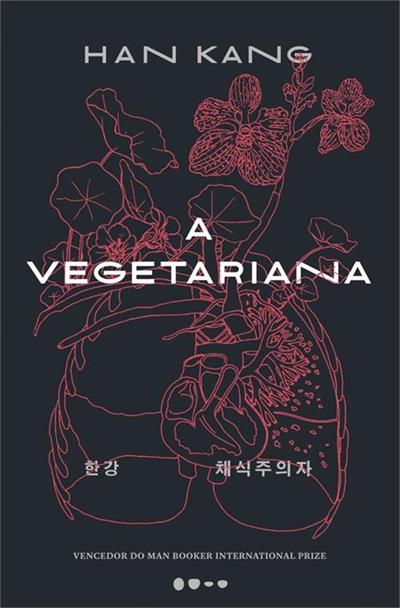
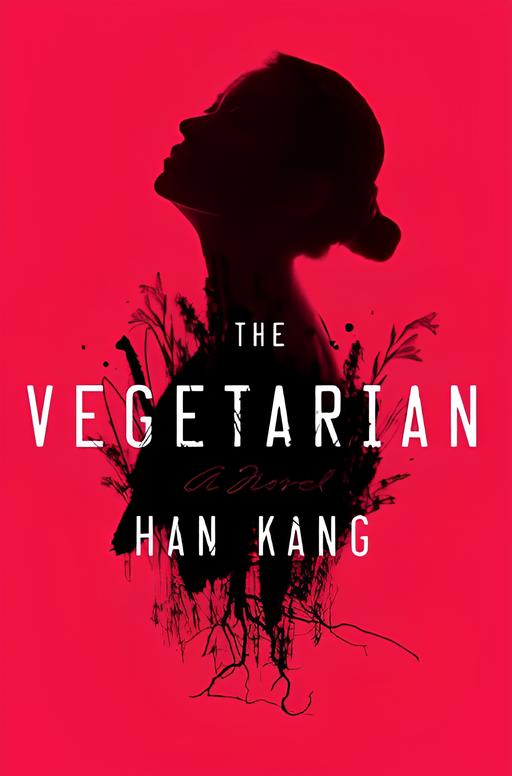
Covers of The Vegetarian’s translated editions in Portuguese (left, Ed. Todavia, Brasil) and Spanish (right, Ed. Penguin/Random House).
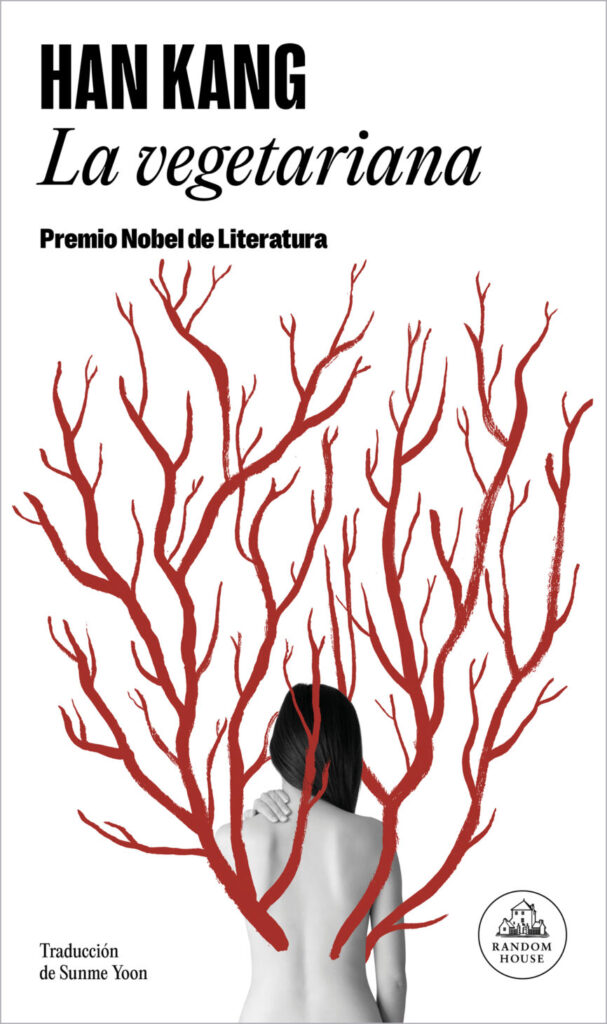
These suggest the body-territory interweaving and the transformation of Yeonghye’s body into flowers and trees.
Third stage: the tree
The book’s final section, and the only one narrated by a woman, Inhye, Yeonghye’s sister, is also the most reflective part. Inhye observes her sister in the hospital environment, where she witnesses the final stage of her metamorphosis: a body that refuses to be a person, in search of a post-human state.
Here we encounter the body as a sovereign territory, with Yeonghye’s total refusal — in photosynthesis and the dissolution of her humanity. It’s not madness in the clinical sense, but a biological attempt to change species to escape the chain of predatory violence. It’s at this moment that the biopolitical intervention begins, to use Foucault’s term, upon Yeonghye’s body-territory. In this stage, she stops eating completely and begins to do a headstand, seeking to take root. She says: “I don’t need to eat, sister. I need water.”
Medicine intervenes with forced feeding, with a nasogastric tube, materializing the State’s biopolitical power, which doesn’t allow the subject to die, nor to cease being human. It demands the maintenance of biological life (zoé), even when political life (bios) has been entirely annihilated.[iii]
Han Kang suggests that, in a world made of violence, the only possible innocence is a vegetable one. But this innocence is incompatible with human survival. Becoming vegetable territory, for Yeonghye, is a suicidal but sovereign act.
Inhye realizes that her sister might not have been mad, but that the so-called normal world — where we eat meat, obey husbands, and live empty lives — is the true madness. The ending suggests that Yeonghye’s resistance has infected her sister.
The book ceases to be about Yeonghye’s sacrifice and becomes about Inhye’s awakening. The beginning of her own war. We´re left with the uncomfortable question: Inhye ends the book looking at the trees not with fear, but with “ferocity”. Is she condemning her sister’s madness, or is she, finally, joining her in spirit?
Who truly became territory: the one who died trying (Yeonghye) or the one who survived and now sees the world with different eyes (Inhye)?
By way of conclusion
To think about the theme of “becoming territory” through Han Kang’s work is to operate a series of displacements.
First, it is possible to consider Yeonghye’s becoming territory as a strategy of implosion. She seeks to disappear as a human to be reborn as a plant, in a melancholic and tragic metamorphosis that ends asphyxiated by hospital biopolitics. Indeed, this tragic dimension was emphasized by other participants in our Reading Group, who felt that the story conveyed how violence ultimately destroys Yeonghye’s body-territory.
Secondly, violence presents itself in diverse forms: domestic, intimate, institutional. The husband ignores, the father assaults, the brother-in-law abuses under the pretext of art, the doctor incarcerates. All seek to correct Yeonghye’s deviant body. It’s the brother-in-law himself, amidst his obsession, who in a moment of strange clairvoyance perceives her and comes to consider her “a sacred being, neither human nor animal, or perhaps a being between vegetable, animal, and human, all at once”. His vision, albeit aestheticizing, captures the core of the metamorphosis that the others only wish to suppress.
Finally, Yeonghye embodies a deep ecology taken to its ultimate consequences. By recognizing the interconnection among all beings, she refuses to kill. However, her ecology is solitary, devoid of community.
What does it mean, in practice, to “become territory”? And is it possible to do so without perishing, like Yeonghye? The work The Vegetarian does not offer answers, but constitutes, in itself, an aesthetic event that forces such interrogations.
The notion of body-territory provides a critical vocabulary to name this radical disorganization of the human, showing, at the same time, the universality of the patriarchal-colonial war machine and the singularity of tactics of refusal.
Yeonghye teaches the absolute limit of non-participation. If her path is non-transferable and tragic, it nonetheless serves as a mirror that refracts the violence of the world and forces us to contemplate the price and the power of becoming, irreversibly, one’s own territory.
————————————————————————————————————————–
[i] The concept of body-territory (cuerpo-territorio or territorio cuerpo-tierra), which emerged from a political group of Maya-Xinka indigenous women in Guatemala, is central to communitarian and territorial feminisms in Latin America. It corroborates this vision by establishing a cosmological understanding that connects body and nature as an inseparable continuum. This perspective acts as a transformative and decolonial tool that conceives the body-territory as the basis for promoting life, dignity, and resistance, demonstrating how intersecting forms of violence structurally affect both women and the physical spaces they inhabit..
[ii] The Sexual Politics of Meat proposes an innovative critical theory that unites feminism and vegetarianism, arguing that there is an intrinsic link between patriarchal domination, expressed in violence and the objectification of women, and the act of killing and eating animals.
[iii] This medical intervention illustrates the biopolitical theories of Michel Foucault and Giorgio Agamben. For Foucault, the body is a surface of inscription subjected to historical power through medical control. Agamben expands this by analyzing the modern politicization of zoé (simple biological life). In extreme medical contexts like artificial reanimation, biological life is entirely separated from the individual’s form of life. Reduced to pure zoé, the patient’s body becomes the ultimate paradigm of sovereign power and law.